

IS THIS JUST ANOTHER TREND OR HAS FASHION GONE CONSERVATIVE?
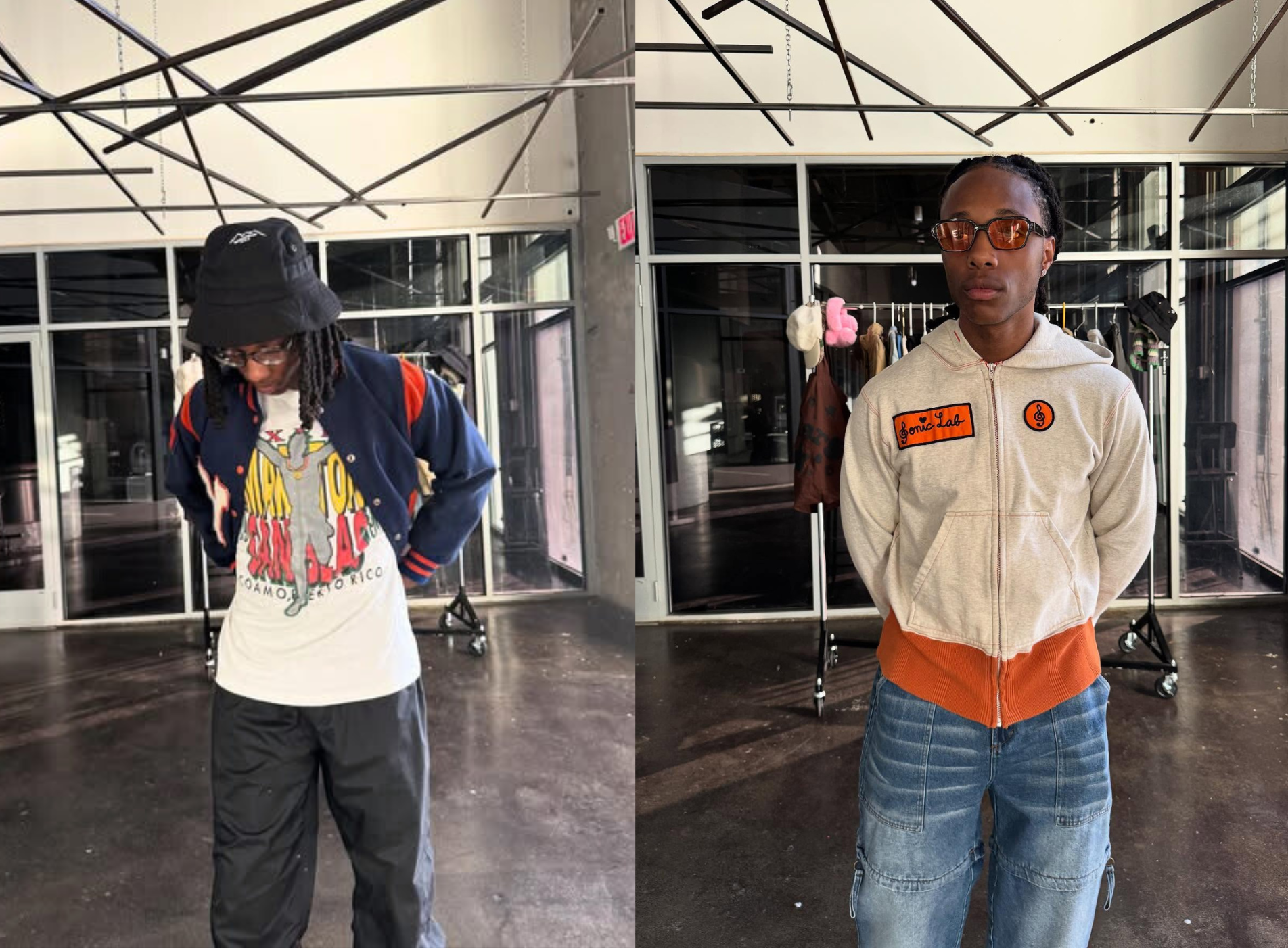
The yns are wearing quarter zips — Urban Dictionary “yn” if you must. If you’re gainfully employed and not chronically online, quarter zips (and matcha) have become the latest trending accessories for young black men as Nike techs have been abandoned for preppy pullovers. While the current craze is slightly comical, does it reveal something more insidious?
It’s hard to watch young men on TikTok show off their Ralph Lauren quarter zips and not get flashbacks to The Fresh Prince of Bel-Air. When Will first arrives to the affluent city and tries to fit in with Carlton and his rich friends, the West Philly-bred teenager defiantly turns his prep school blazer inside out. While the bold move catches the attention of his classmates, namely Kellogg (affectionately known as Cornflake), Carlton chastises Will for not assimilating.
Fashion is inherently political and with the rise of conservatism, people might be using clothing to climb the class system. With the dismantling of DEI and the subsequent erasure of diversity, Blackness is no longer as cool or profitable as it once was. For example, Target significantly scaled back its DEI program, citing a desire to “stay in step with the evolving external landscape” in January 2025. America likes to ignore that it was literally built on the backs of Black and brown folks. Rather than adequately acknowledge our contributions, our existence is minimized and denigrated, while our culture is co-opted and commodified. Naturally, fashion is no exception. Inextricably linked to hip-hop, youth culture and rebellion, streetwear has historically been othered until worn on white bodies. Acrylic nails, gold bamboo hoops, saggy pants and Timbs were all ghetto until seen on Kylie Jenner and Timothee Chalamet. Celebrities will often adopt a Blaccent and certain way of dressing to gain popularity, later shedding their BET-friendly persona in an effort to be taken seriously — i.e. Post Malone and Miley Cyrus, just to name a few. While Black culture is the blueprint for most trending styles, it is often exploited and then discarded. This could be why the Kardashians are dissolving their BBLs.
Fashion’s relationship to Blackness hasn’t always been parasitic, however, as designers have repeatedly looked to hip-hop for inspiration and vice versa. In the late 80s and 90s, brands like Tommy Hilfiger were worn and loved by Aaliyah, Grand Puba, Maxwell Dixon and Snoop Dogg. In the 2000s and 2010s, preppy polos went triple platinum for rappers. Raheme Dawkins, founder of Better Alive Than Dead shares, “Personally, I just see quarter zips as another trend, just elevating a young man’s wardrobe and presenting a different way of dressing and making it more acceptable, dipping back to Kanye’s pink polo era, Jay Z’s blazers and fitted caps, as well as Young Dro’s full polo fits.”
According to DJ Josh Jenkins, it’s important to remember that fashion is also a commodity. “When you look at Louis Vuitton hiring Virgil Abloh, then Pharrell Williams, it’s clear that fashion is a purely capitalist industry. Since the dawn of this country, Black folks have been exploited for money. Minstrel shows are an early example. Black identities and modes of expression continue to be profitable in a lot of ways, so in some sense, the powers that be want me to keep buying into this ever-churning wheel. The more you sell Blackness, the more profit you make.”
Whether the quarter zip trend comes from a place of earnest exploration or is the consequence of conservatism, it’s hard to tell. Nothing happens in a vacuum and it’s impossible to ignore that clothing can often be a means of survival, especially for Black men. When certain items are coded as criminal — ski masks and hoodies, dressing like Carlton rather than like Will may mean the difference in walking away unharmed, being arrested or worse.
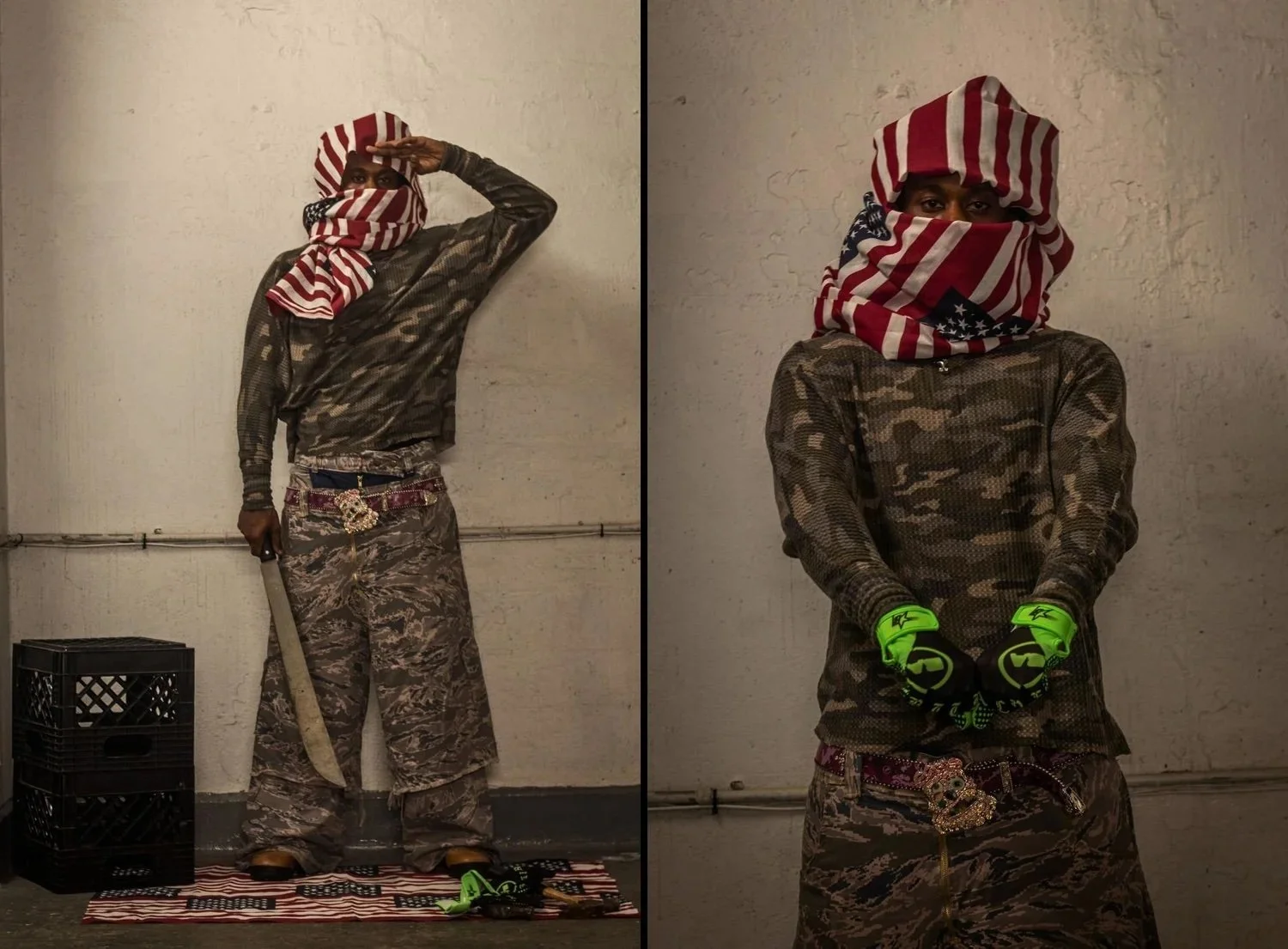
How do you remain authentic in a society that wants you to conform and deems fashion that both originates from Black culture and is worn on Black bodies, as less than? For Raheme, he isn’t shy about confronting prejudices, relying on his character to speak for itself. “Sometimes, I lean into stereotypes just to troll, but my character and how I present myself as a whole overrides whatever I’m wearing that might not be appropriate or stylish in some people’s eyes.”
Josh adds, “You have to get dressed. We’re influenced by a lot of different things that determine what we wear. If anything, we are at a time now more than ever when people express themselves in very extreme manners. It can be hard to tell if it’s extravagant for the sake of being extravagant or if the person truly wants to wear something because it represents them. There are a lot of conservative agendas that exist throughout society. I don’t know how much of its effect on fashion really matters because for the people who really use clothing to communicate, they’re doing that regardless of whatever agenda is taking place,”
“At a certain point, you have to stop listening to the noise and just start making more decisions with your gut and your heart,” Josh continues. In an increasingly conservative climate, navigating stereotypes while staying true to yourself can be fraught territory, but sometimes it’s worth it to put that shit on.