

NAVIGATING STATE SANCTIONED VIOLENCE
CAFETERIA SITS DOWN WITH MAKE THE ROAD CT TO DISCUSS THE PRESENT AND FUTURE OF HARM AND HEALING FROM ICE
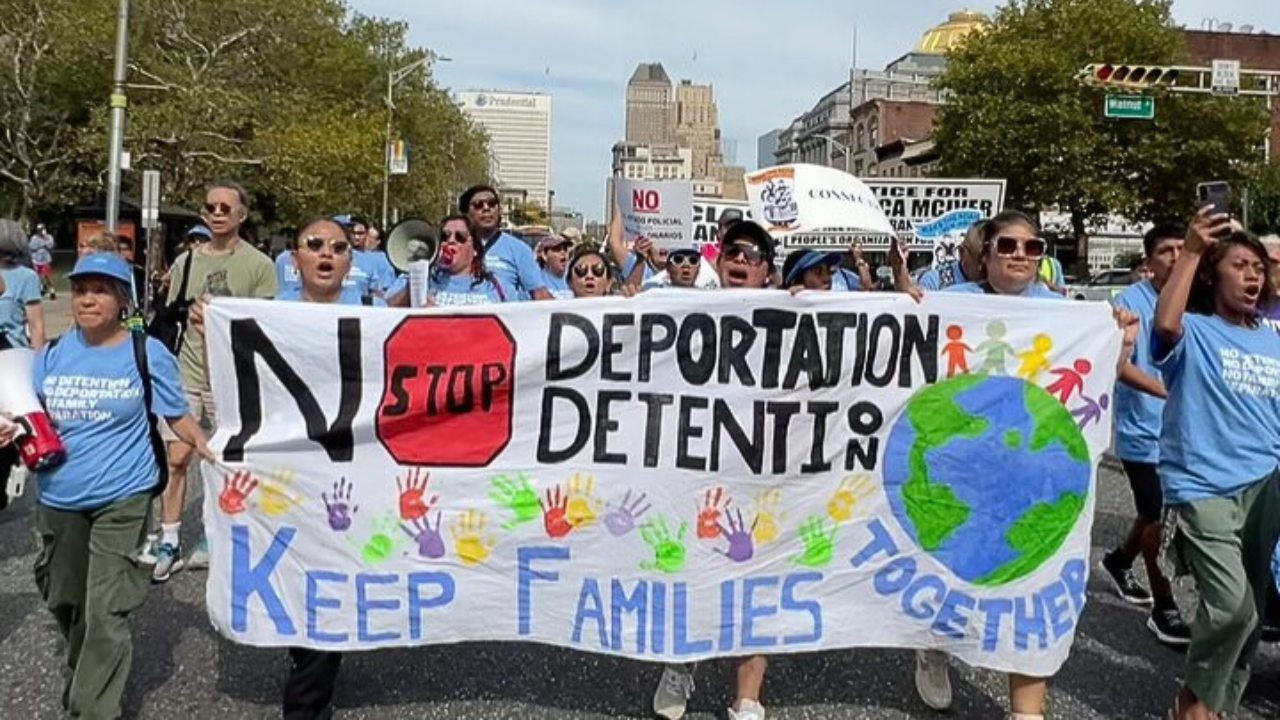
Editor’s note: This interview was conducted prior to the Minneapolis shooting.
Would you feel safe after four men in ski masks pull into your driveway and grab your mom from the car on your way to school? Where would you feel safe if armed men barged into your home, without a warrant, to arrest you? What if you were shot and killed as you tried to leave the scene? How can you exist in a world that has labelled your existence a crime?
Since the onslaught of mass ICE deportations and kidnappings, nowhere is safe. In August 2025, 65 people were arrested by ICE over the course of four days in Connecticut. While the Trump administration claims it’s only going after “the worst of the worst,” people have been arrested while they were at court, renewing their documents. It doesn’t matter if you’re undocumented or otherwise as American citizens have been detained by ICE. If you are visibly a person of color, you are not safe in a country determined to eradicate “the other” —no matter the cost. The government doesn’t care if you gave birth 15 days ago and your newborn is in NICU — ICE arrested 22-year-old mother Nayra Guzmán as she was on the way to the hospital with her family. An honor roll high school student from Meriden with no criminal record was arrested days before his graduation. A 79-year-old woman is currently suing ICE for shoving and pinning her to the ground during a raid. ICE does not care about innocence, it only causes injury.
While those who support deportation may do so for the supposed safety of America, state-sanctioned violence is actually tearing our country — and families — apart. As the daughter of immigrants, I fear for their safety every single day. This past fall, I urged my mother to cancel her trip back to her home country, worried that leaving America would result in her deportation, despite the fact that she has been a legal citizen for longer than I have been alive. While my mother thought my anxiety was irrational, the mass ICE kidnappings have taught me to anticipate violence.
The forceful kidnapping, detainment and assault funded by our government is causing a mental health crisis. To live in a country obsessed with identifying, surveilling and punishing the other is to live in a state of terror. Where would you feel safe if you can’t feel safe in your own home? How do we even begin to heal?
Cafeteria speaks with Make the Road Connecticut Co-Deputy Director Mary Smith to discuss the generational trauma ICE is causing and how we can heal as a community.
Continue scrolling to read the full interview below.

CAFETERIA: Do you think ICE is causing generational trauma via state-sanctioned violence and kidnappings? How will it trickle down to future generations?
At Make the Road Connecticut, we understand trauma not as an abstract concept, but as something our members live with every day. When families experience sudden detentions, separations or the constant fear of enforcement, the impact extends far beyond the individual, it affects children, parents, and entire communities.
We hear from parents who are afraid to drive their kids to school, from children who worry every day that a loved one may not come home. That kind of sustained fear has long-term consequences for mental health, educational outcomes and trust in public institutions. History shows us that when communities are targeted through state-sanctioned enforcement, the effects do not disappear in one generation. They shape how future generations experience safety, belonging, and civic participation.
Because CT is a mostly liberal state, there may be some level of detachment when thinking about ICE raids. What is happening on the ground in Connecticut regarding ICE and mass deportations? Do you think the state is doing enough to protect immigrants?
Connecticut is often seen as a welcoming state, but on the ground, immigrant families are still experiencing ICE activity and the fear that comes with it. We hear from members who are afraid to go to work, drive, or seek help when they need it. Community members are being targeted by ICE outside their homes, on their way to work, and outside of the courthouses.
While Connecticut has taken some important steps, such as limiting certain forms of cooperation with federal immigration enforcement and limiting ICE arrests inside courthouses, those protections are not always consistent or fully enforced. Gaps remain, and ICE is finding their ways around the laws, such as targeting people when they walk out of court, for example, now that they can no longer enter without a judicial warrant. There also continue to be gaps in language access, legal defense funding, and accountability when local or state actors enable ICE activity. So while progress has been made, we do not believe the state is doing enough. Protecting immigrant communities requires proactive policies, clear enforcement of existing laws, and investment in community-based solutions, not just rhetoric.
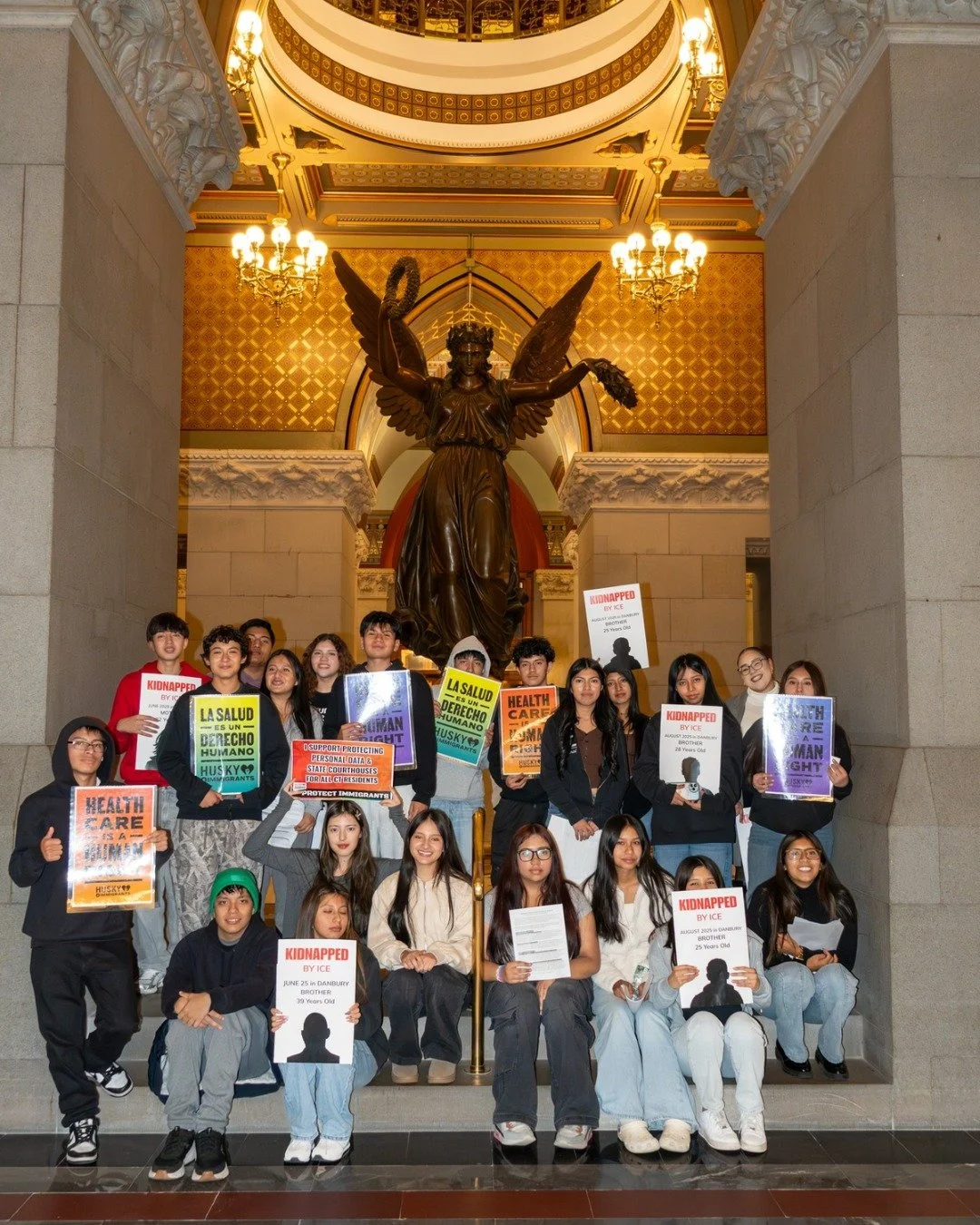
What can we do to advocate for those who have been directly wrongfully deported and/or affected by the infiltration of ICE in Connecticut?
First, we need to listen to and center the people most directly impacted. That means sitting with people and really listening to how they want to fight their case or the case of their loved ones. It also means supporting access to reliable and low cost immigration attorneys, family support services, and community-based organizations that are responding in real time, of which there are many in CT. There is also a lot of coordinating that happens across states amongst different community based organizations or volunteer networks, as community members often get moved quickly from one state and detention center to another. It also means holding elected officials accountable, asking where they stand, how they are using their power, and whether they are willing to prioritize immigrant families over federal enforcement agendas and even over their local and state agendas. Community members can support organizations doing this work, show up to public hearings, and challenge narratives that normalize family separation or criminalize immigrants.
Solidarity is not passive. It requires action, resources, and a willingness to listen to those most affected.
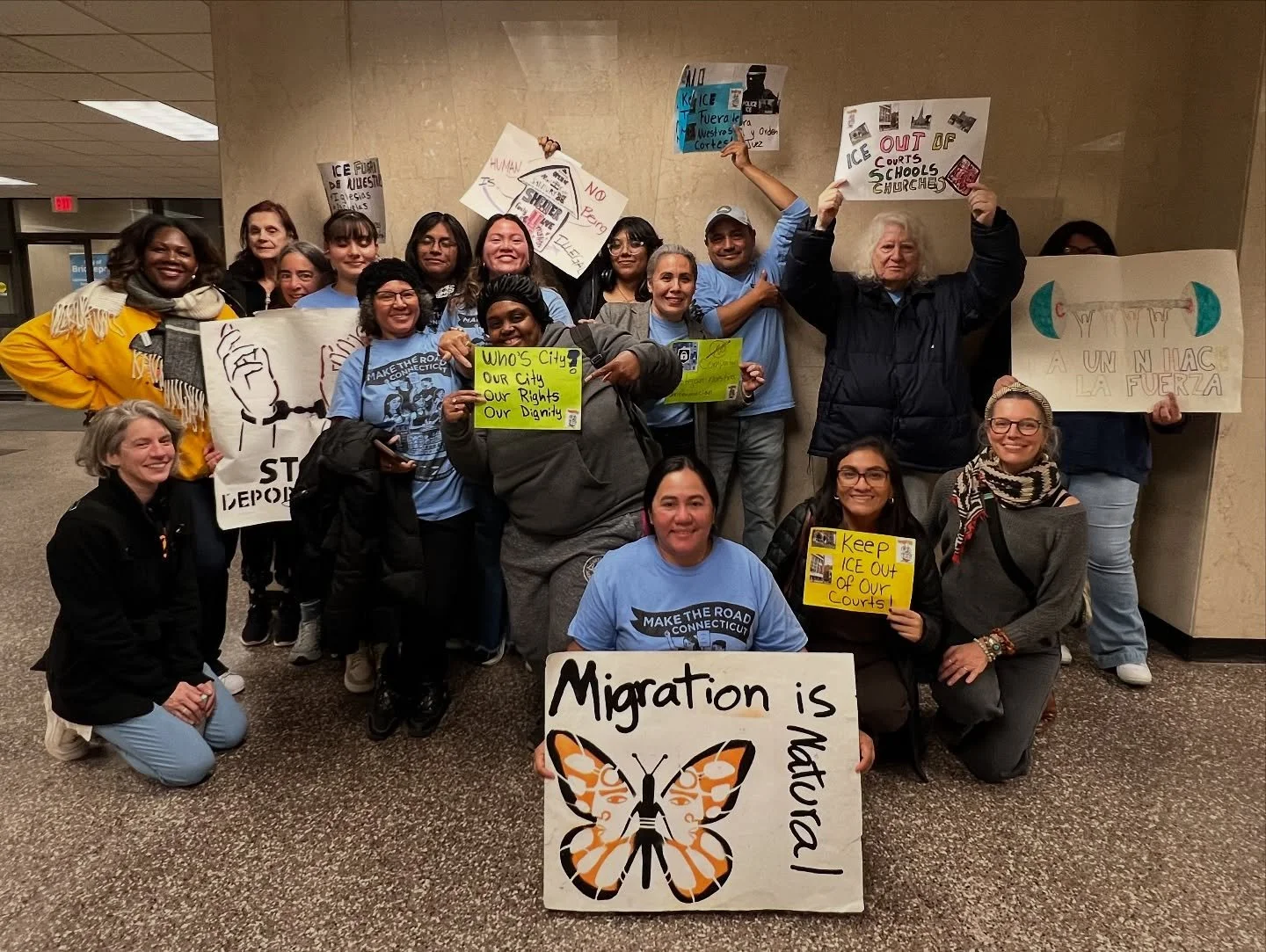
How can the immigrant community heal from witnessing and enduring state-sanctioned violence? Is healing possible?
Healing is possible, but it cannot happen in isolation or while harm continues unchecked. At MRCT, we believe healing is deeply connected to organizing, community, and collective power. When people come together, share their stories, and fight for dignity and justice, that itself becomes a form of healing.
At the same time, healing often requires material support for basic needs, mental health services that are culturally and linguistically appropriate, safe spaces for youth and families, and policies that reduce harm rather than perpetuate it. Healing is not about forgetting or moving on; it’s about creating conditions where people can feel safe, valued, and empowered. That is the vision we continue to organize toward.