

EBONY HORSEWOMEN HEALS HARTFORD
CAFETERIA SITS DOWN WITH FOUNDER PATRICIA KELLY TO DISCUSS THE HIDDEN HISTORY AND LEGACY OF HORSE RIDING
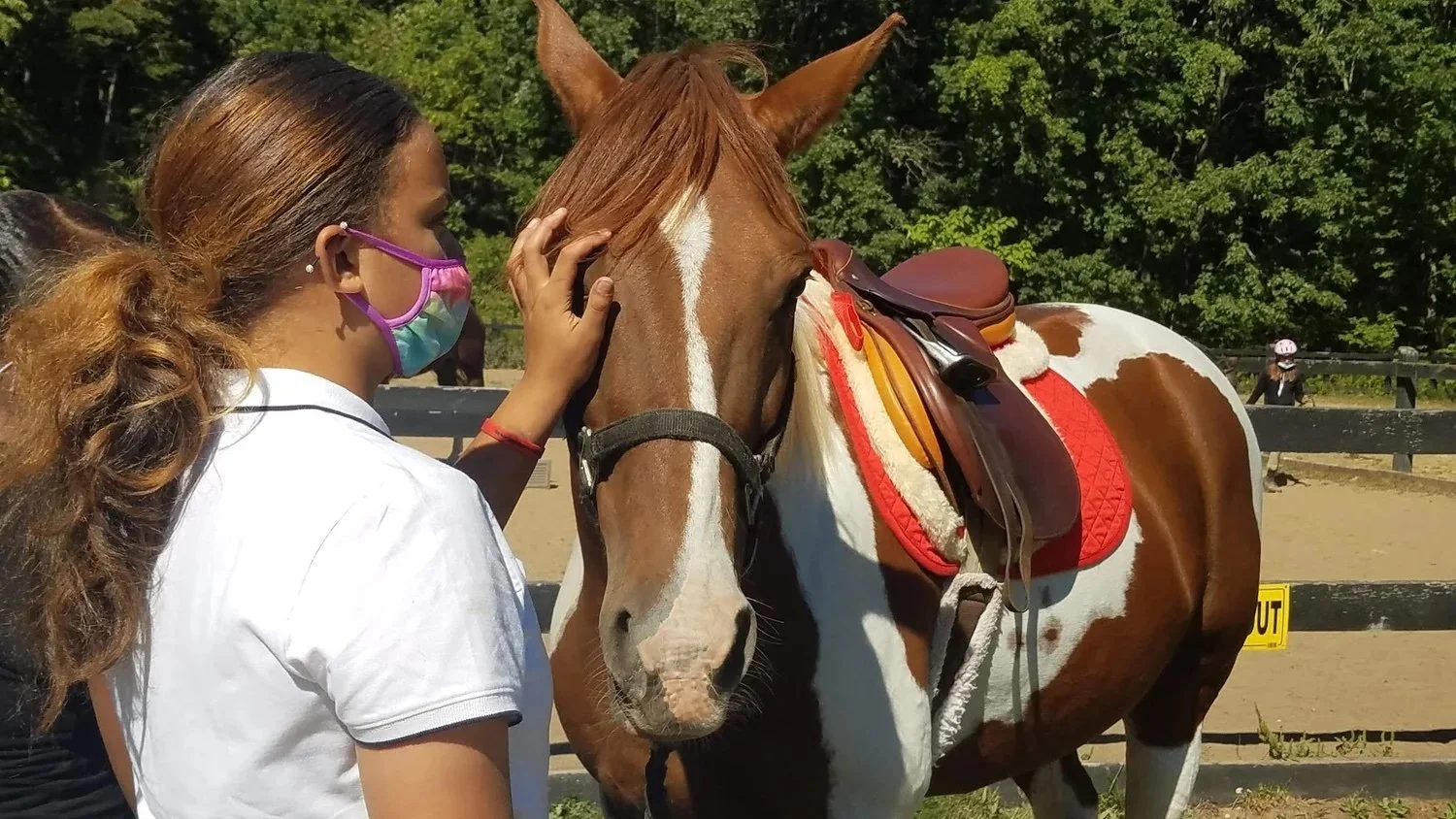
What comes to mind when you think of an American cowboy? Is it a rugged Clint Eastwood type? It might surprise you that the first cowboys were Black. Despite the fact that some of the first equestrians in America were people of color, our impact and influence has been erased from the history of horse-riding.
Ebony Horsewomen is not only working to recover that history, but is restoring our connection to horses and helping others heal. More than just a horse-riding barn, the organization pays homage to Mary Fields, the first Black female Star Route U.S. Postal Service mail carrier in the United States. Ebony Horsewomen also continues the legacy of horse-riding as it is the only Black-owned organization in the country dedicated to culturally competent equine-assisted psychotherapy.
Offering a mix of classes for adults as well as children, the organization utilizes horses’ innate emotional intelligence to bridge the gap traditional talk therapy leaves behind. While the girls participate in the Leadership Academy & Riding Team and the boys enroll in the Junior Monitor Patrol, all riders learn the ins and outs of the horse, walking away with not only wildlife knowledge, but greater responsibility, discipline and empathy. "Horses make us more human,” founder Patricia Kelly shares.
If American cowboys represent grit, resilience and self-determination, Ebony Horsewomen is helping teach those skills and values through its unique modality. Although horses are emblematic of America, most people don’t see them on a daily basis. When we’re in the presence of a horse, it can’t help but trigger this ancestral awe and familiarity. Despite being non-verbal, the magnificent four-legged creatures are able to process and respond to human emotions. There is no denying a horse’s consciousness. Without the burden of prejudice or biases, horses are able to break through barriers most therapists cannot.
Some might think that an equine center is more on brand for Greenwich than it is for North Hartford, but those living in urban areas are just as deserving of spaces like Ebony Horsewomen. “When we first opened, some people would ask, ‘What value is it for Black kids to be trotting around on horses?’ No one questions the value of horse-riding when the students are white. My first class of students were here every day, this was their safe space,” founder Patricia Kelly shares.
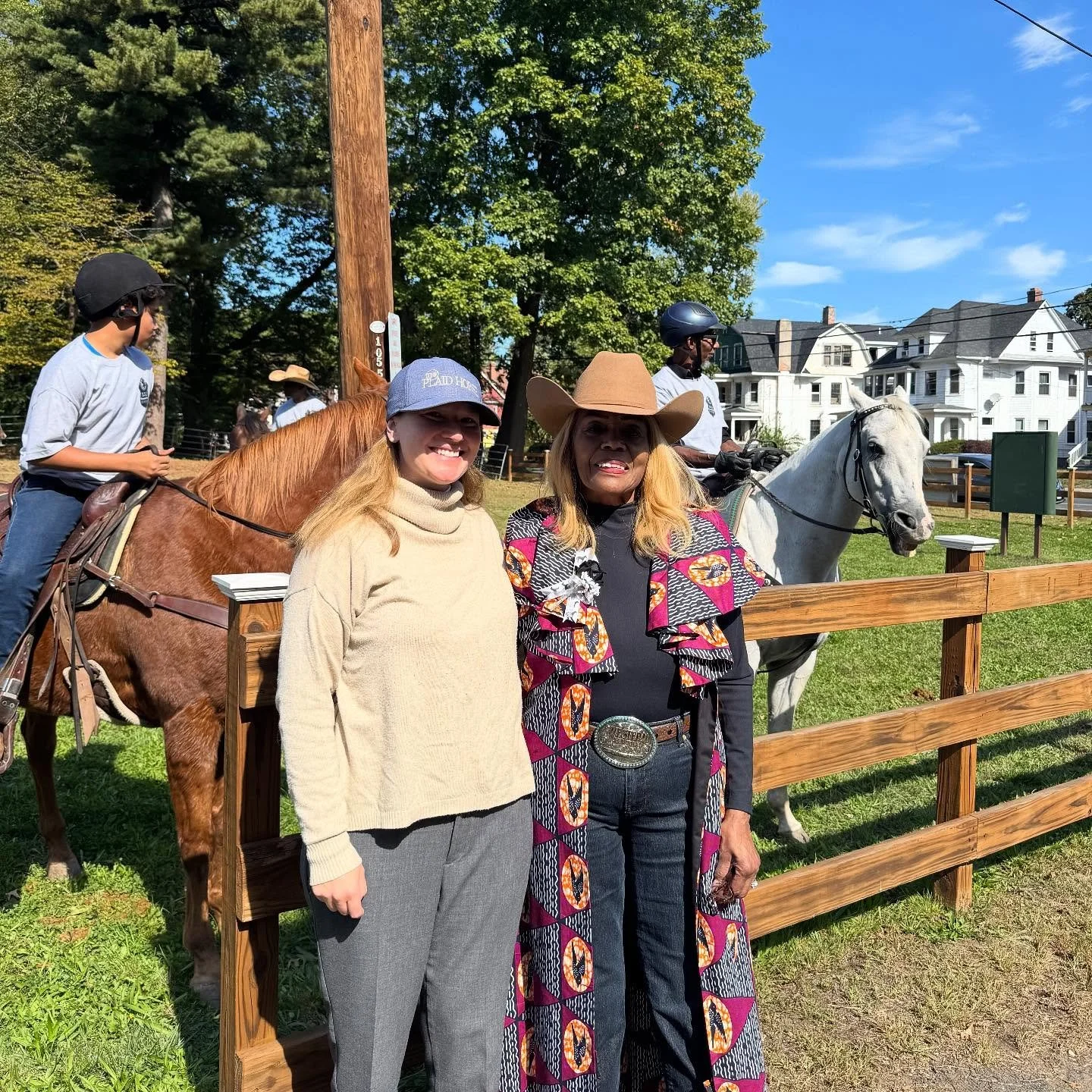
Established in 1984 by Ms. Kelly, the mental health center came to fruition “by accident in human terms, but on a divine level, it was designed for me from birth to do this,” she continues. The day Ms. Kelly was fired from her law firm, she got the call her bid on 337 Vine Street went through. The building that would later become Ebony Horsewomen was hers. By divine force, Ms. Kelly was pushed out of one life and into another, stepping into a calling that was cemented in her childhood. Born and raised in Hartford, Ms. Kelly’s love of horses started at nine years old when her neighbor and grocer Mr. Fisher taught her everything he knew about horses. However, as life got in the way, Kelly found herself riding less. Between enlisting in the U.S. Marine Corps during the Vietnam War, getting married, having kids, getting divorced and “trying not to have a nervous breakdown,” Ms. Kelly lost her sense of self.
Eventually, Ms. Kelly convinced one of the older members of Ebony Horsemen to let her ride his horses. “It was healing, it was therapy,” she reflects. Soon, Ms. Kelly began riding casually with her friends, earning the nickname the “Ghetto Riders” as they would duck and dodge between cars on Albany Ave. Ebony Horsewomen started as a social outlet for Black women. After two little boys asked her if what she was riding was indeed a horse, it eventually transformed into a safe space for children.
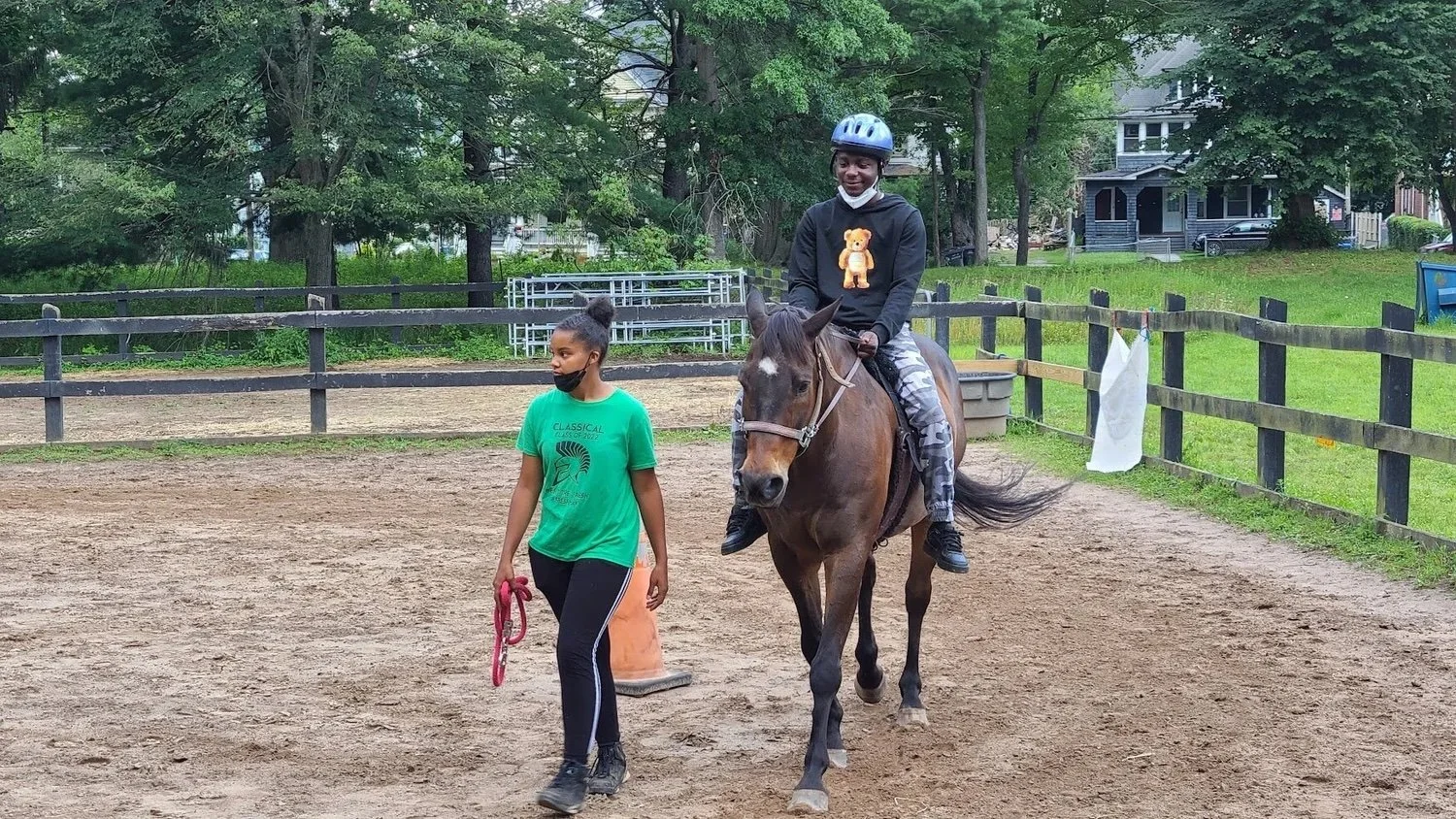
If North Hartford, and its residents, are misunderstood, horses are able to see past that.
“Our kids today need programs like this. The pandemic, along with technology, has stripped them of their sense of self. The threat that they are under now is worse than the discrimination of the 1950s and ‘60s. It is so insidious because it is built into the system. I can't tell you how many times I have walked past the stall door and heard these kids telling their horse things they would probably never tell anyone. That's part of therapy — getting it up and out,” Ms. Kelly shares.
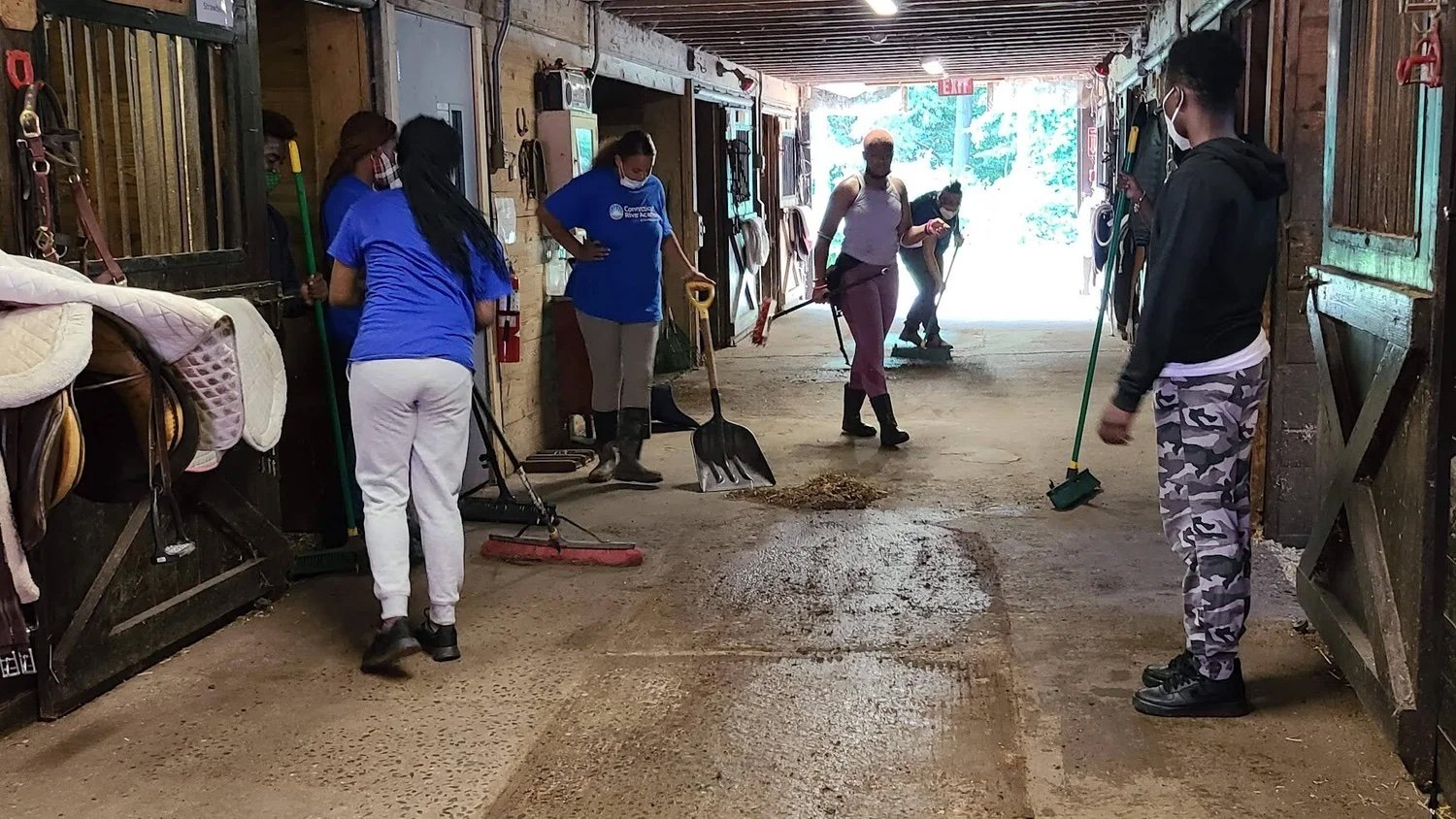
A therapist who is not trained in cultural competence might see a rambunctious Black teen and label them as aggressive. “If you don’t understand Black culture or vernacular, you might see it as problematic. Cultural competence might seem like a minor issue, but its lack can often be fatal. “People are misdiagnosed and parents are charged with stuff that’s not there. That’s why we train and certify across the country because talk therapy can be invasive for those who have been taught ‘what happens at home, stays at home.’” A horse knows the difference between pain and aggression. With equine therapy, the horse becomes both a diagnostic tool and an emotional support animal.
The very presence of organizations like Ebony Horsewomen uplift and dignify an area that is constantly denigrated. Teaching children and teens how to control a 1200 pound living being within chaotic environments like parades, teaches them how to control themselves amidst the chaos the world presents. “Horses do not understand English, but you’re communicating with them without talking. If you can control and communicate with a nonverbal animal in a chaotic environment, what can’t you do? When my students go out into the world, they will know who they are,” Ms. Kelly attests.
You don’t know what you can be unless you see it.