

LEGENDARY BASSIST DOUG WIMBISH RETURNS TO HARTFORD FOR AMERICA’S 250TH ANNIVERSARY
THE RENOWNED MUSICIAN CO-PRESENTS AMERICA 250 CONNECTICUT COMMEMORATIVE CONCERT IN COLLABORATION WITH HARTFORD BONANZA AND HARTFORD SYMPHONY ORCHESTRA
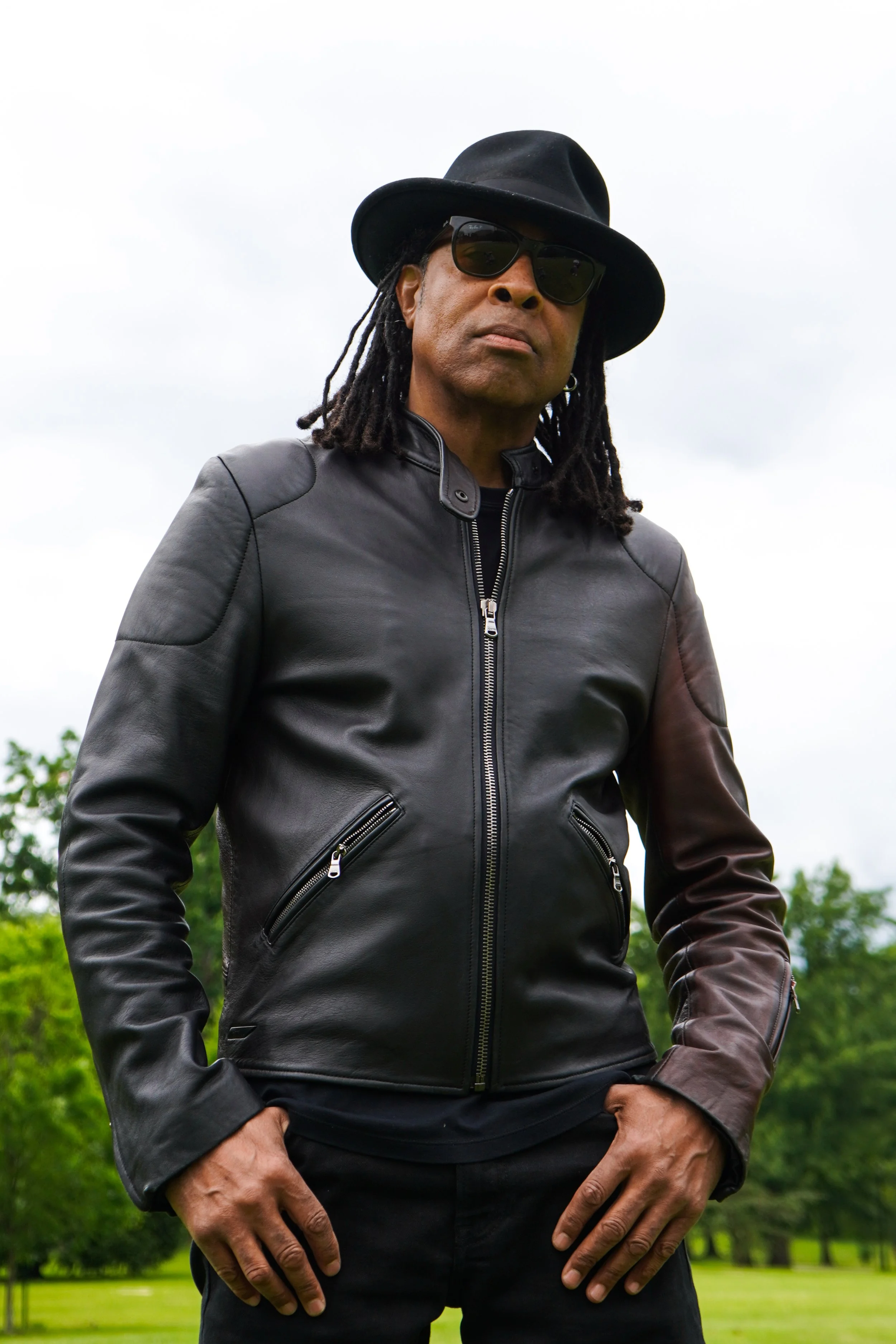
For Hartford born and bred musician Doug Wimbish, music is his passport to the world, but Hartford is his foundation. The globally renowned artist is returning home to co-present a once-in-a-lifetime performance, the America 250 Connecticut Commemorative Concert, in partnership with Hartford Bonanza, produced by First Night Hartford, Inc. Famously known as the lead bassist of Grammy Award-winning band Living Colour, Wimbish is bringing his music and educational festival WimBash to Bushnell Park for the historic Fourth of July celebration. The free performance will also feature the full Hartford Symphony Orchestra with Hartford Chorale.
“At the end of the day, Hartford has a great history and a lot more to offer this world than most people think. Hartford Bonanza is great because it brings people together and gives us a chance to celebrate and share the city’s unique history, culture and spirit. It’s not a ‘me’ thing, it’s a ‘we’ thing – it’s about community. I’m thankful that Hartford Bonanza invited me to participate in this 250th celebration of America. Music tames the wild beast. It’s amazing what music, particularly a drum beat, can do. We need to celebrate. We need to bring people together and heal,” Wimbish shares. While honoring America’s 250th anniversary, Hartford Bonanza showcases and uplifts the city’s joyful spirit and rich culture, allowing our community to celebrate one another and the beautiful place we call home.
Hartford Bonanza offers a full day of fun, spotlighting the best of the city’s art and culture, as well as food, community and history in Bushnell Park from 12-10 pm. America 250 Connecticut Commemorative Concert, the 7:30pm headlining concert, will be performed in three sets: a symphonic set by the Hartford Symphony Orchestra, a WimBash band set led by Doug Wimbish featuring artists across generations from his groundbreaking career, and a collaborative set featuring HSO and WimBash artists together playing an iconic song selection before the 9:30pm fireworks over the Capitol.
Continue reading for the full interview below.
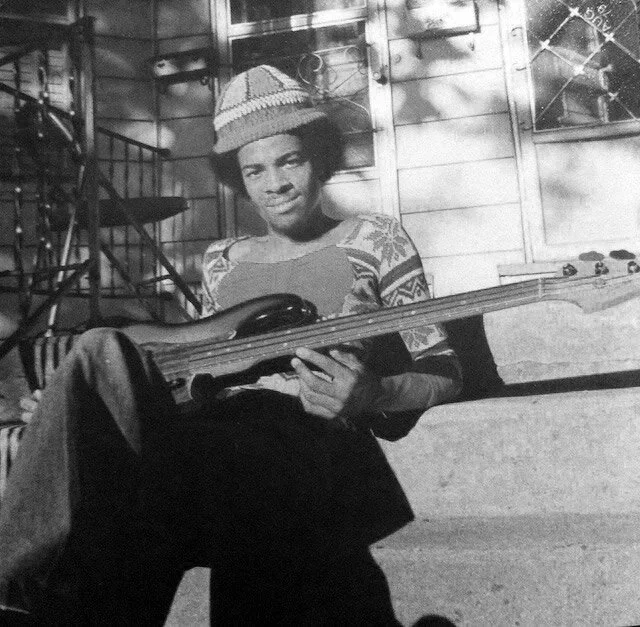
Doug Wimbish (1973, photo by Moe Wimbish)
CAFETERIA: As a musician born and raised in Hartford, playing at Hartford Bonanza for the Fourth of July in Bushnell Park must be a full circle moment. What sparked this collaboration and what does this partnership mean to you?
DOUG WIMBISH: The collaboration between WimBash and Hartford Bonanza, as well as the Hartford Symphony Orchestra, was born out of a desire to celebrate community and culture. WimBash is a long-held personal project of mine. We use music and education to bring people together and have put on 70 different events across America as well as Europe. Hartford Bonanza invited us to join the city’s 250th celebration for the Fourth of July. I was able to bring together a few great musicians that are also friends of mine and it just blossomed from there. I’m grateful because Hartford Bonanza is all about the city, community, music and bringing people together. I was born and raised in Hartford and no matter where music has taken me around the world, Hartford has always been my home. Being able to come back and perform in Bushnell Park with the Harford Symphony Orchestra is really special. Hartford Bonanza is about celebrating the city with its people. It’s about bringing everyone together. This event is not just a concert – it’s a community event created to encourage a sense of pride in Hartford.
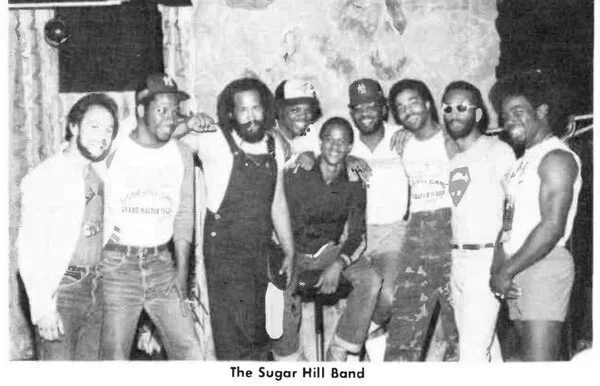
L→R: Keith LeBlanc, Phil Evans, Ed “Duke Bootee” Fletcher, Otha Stokes, Dwain Mitchell (seated), Randy Bost, Doug Wimbish, Skip McDonald, Winston Dixon. Missing from photo is Craig Derry
CAFETERIA: Hartford has such a colorful music history, I would love to hear what it was like coming up as a musician in the early days.
DW: Hartford truly does have a rich and deep history. Growing up in Hartford and witnessing all of the music and culture was fantastic. There were a lot of heroes when I was coming up, one of which was Jackie McLean. I attended The Artists Collective in 1974 and that experience changed my life. It taught me creativity, discipline and culture.
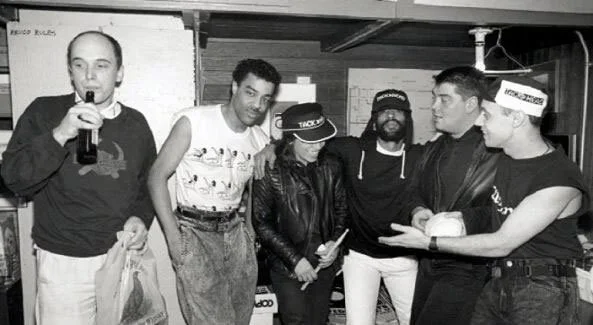
Early Tackhead • L → R • Adrian Sherwood, Doug Wimbish, unknown, Skip McDonald, Gary Clail,, Keith Leblanc (Circa 1985)
I tell people all the time about the importance of learning from their elders. That was the key that changed my life. When I was 17, I met my mentors. In the 1970s, I was in one of my first bands, Wood, Brass & Steel, with Harold Sargent, Hubert Powell, Billy Kevin and Doobie Powell. Skip McDonald, who was my mentor, was also the guitarist and saxophonist, alongside Otha Stokes and Randy Bost. I was still a kid when I met these guys, they were older and took me under their wings. They really taught me so much and that was the vehicle that took me to the next level. Back in the day, there were bands like Tony Bowens and the Soul-Choppers and they were one of the first bands to break out and go to New York. They actually won the Apollo Battle of the Bands. One of the band members, Eli Williams, XY Eli, is still alive and here in Hartford. As a youth, I was able to go and watch these bands play. There were always free concerts happening everywhere, including in Bushnell Park, that also exposed me to music. Those experiences led me to Sugar Hill Records and Living Colour.
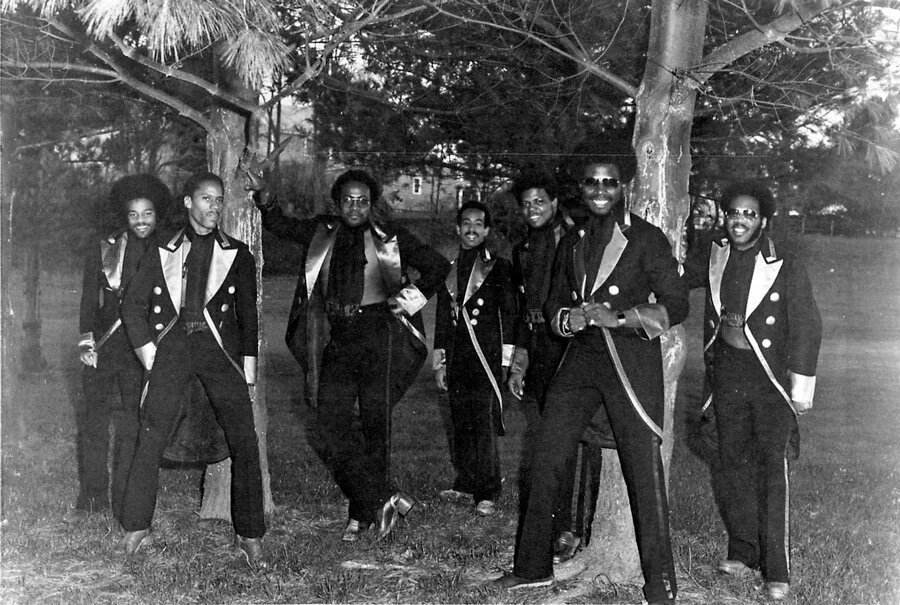
Wood, Brass & Steel (circa 1976)
When I look at Hartford and all the other great musicians that come from here and all the places that provided ways and means for us to play – whether I was playing in Keney Park, the Elk Club or Bushnell Park – there’s a frequency here that I am fortunate to be a part of and I just want to keep that alive. Music became my passport to the world, but Hartford has always remained a part of my foundation and I will never forget where I came from. Hartford is a great melting pot of culture and it’s important to recognize its history.
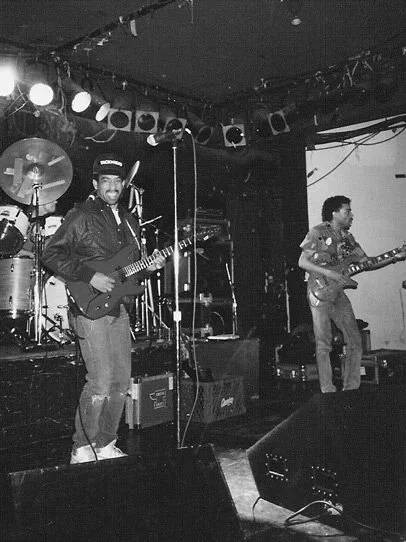
Mark Stewart’s Maffia • Tackhead (Mid 80’s)
CAFETERIA: As someone from a smaller state who has worked to become a globally known musician, I'm sure you know better than anyone how hard it is navigating the music industry especially when you don’t have a mentor or support system. How do initiatives like WimBash ensure that music remains inclusive and accessible for anyone who has the passion and drive to learn?
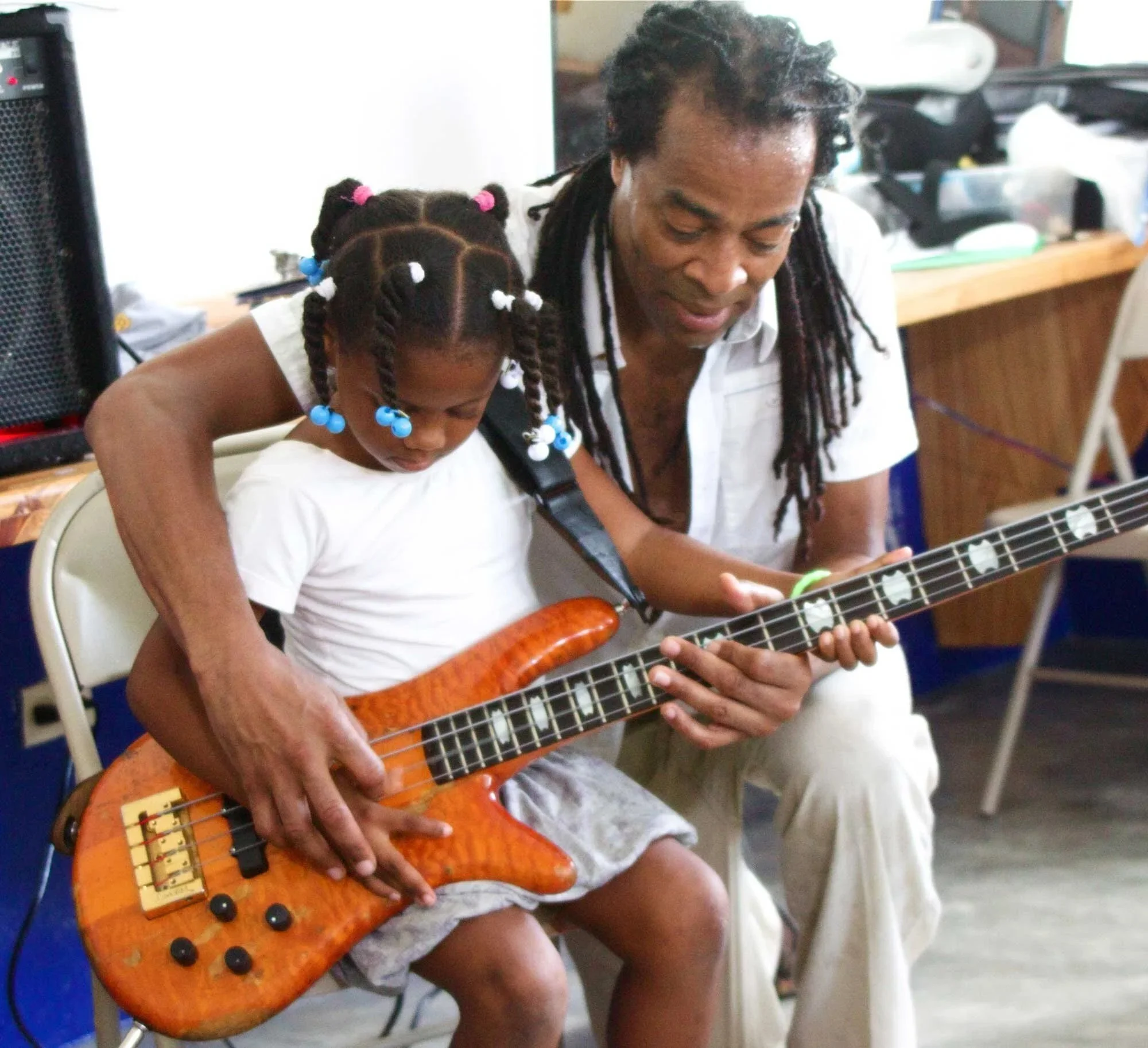
WimBash is about community, mentorship and opportunity. After living in England and New York for several years, I came back home and saw what was happening here. I had a lot of friends that I grew up with who stopped playing music because things changed. I took it upon myself to contribute to the community and founded the club Sully’s. I eventually started educational workshops and invited all of my friends that were musicians as well as kids from The School of Rock. We taught students not only how to record music but I brought my accountant and lawyer to teach them about economics and the music business so that families could actually hear from folks with real world experience.
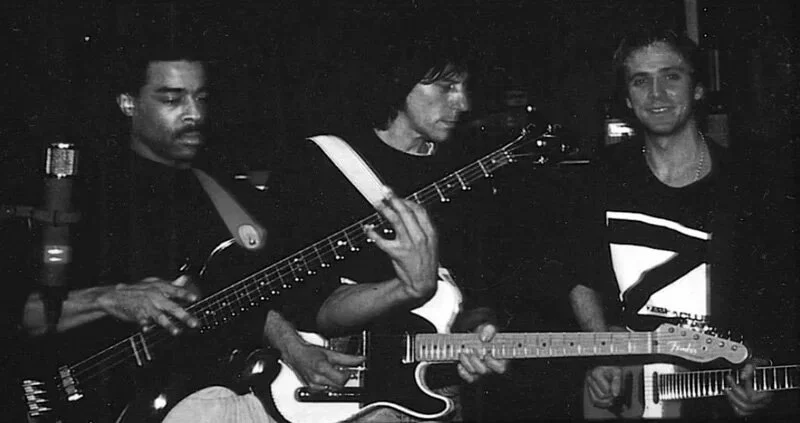
Doug Wimbish, Jeff Beck, Jim Barber (1987, Wisseloord Studios, NE. Photo by Jim Barber)
It takes just a spark for a child to fall in love with music and that day sparked everything for WimBash. I’m doing what I can. I want to do more. The question is what can we all do to help? Talk to the people in Hartford that are writing checks and sending out money so we can get some of those funds directed back into schools for music education, art and culture.
CAFETERIA: A lot of Hartford's music history remains hidden. Although we are the birthplace of amazing musicians like yourself, it can often feel like we’re left out of the conversation. How can we ensure that Hartford and Connecticut as a whole continues to be a part of the wider cultural conversation?
DW: Through education and funding. Our great state has many challenges, but there are also so many good things in Connecticut that need to be supported and amplified. Money needs to go towards schools and education. There are folks who are taking the initiative, but more can be done. You have to have a place to be seen and a venue or gallery that is going to support local artists who are trying to put this energy out into the world. Most things are online these days, but there’s nothing like meeting in person and being able to have a moment to get together and chop it up with each other. There is tremendous value in looking someone in the eye and having a great conversation. There are challenges, but you gotta be in the ball park to take a hit. You can’t be in the stands talking about swing. Go out there and go swing. Do something. Be kind, be nice and find ways to go out of your comfort zone. Do things that are going to challenge you. You have to explore and support your community.
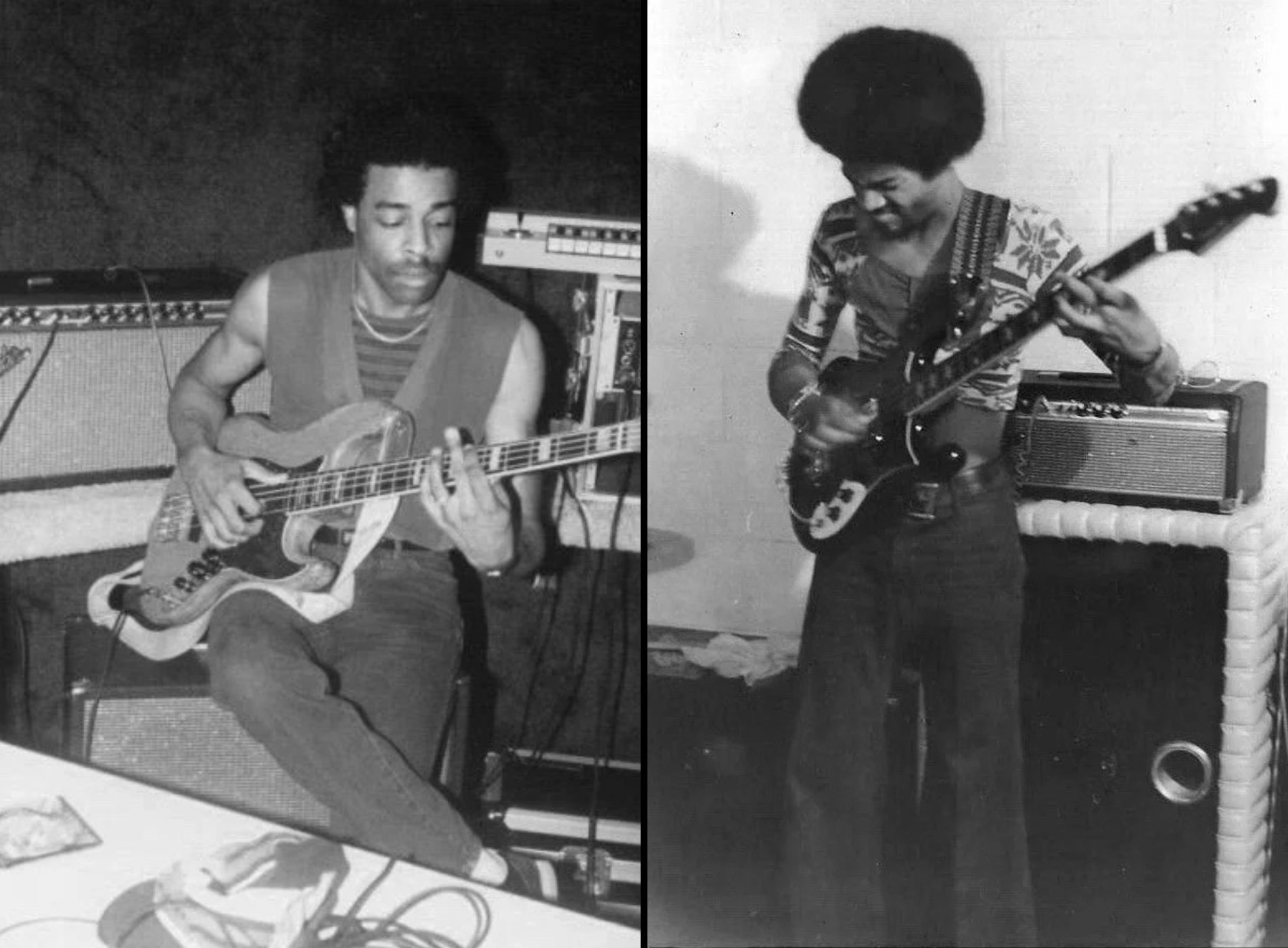
Doug Wimbish, Fender Jazz Bass (Mid 80’s) // Doug Wimbish (1973)