

FEMALE DJS ARE BRINGING BACK DANCING
CAFETERIA SITS DOWN WITH CT’S FINEST FEMME DJS TO DISCUSS HOW THEY ARE BREAKING BARRIERS & CREATING COMMUNITY.

These days, it’s considered cringe to dance, much less try and enjoy yourself. Thankfully, female DJs are resurrecting club culture and bringing back music you actually want to get down to. Back in the early aughts, clubbing’s prime years, women weren’t seen as headliners, but moreso accessories. Sure, we could get in for free before11pm, but the free admission is a marketing strategy to get men to spend money in the hopes of getting laid. Women’s role in club culture was predicated on men’s needs, often putting us on display, rather than actively in the mix. “In the mid 2000s, it was a trend to have models pretend to DJ at events or pop-ups. They'd have a girl behind the decks, but she wasn't actually DJing. In the past, if I was setting up for a gig, people would ask if I was the DJ’s girlfriend,” local legend Connie Carmona reveals.
However, times are changing. There’s no doubt that the pandemic transformed club culture. In the aftermath of a global quarantine, there is a collective yearning for connection. The shift in nightlife has created space for a rebirth. Maybe it’s female intuition or innate creativity, but the rise of female DJs indicates a safer and more democratic dance scene, one that is no longer centered around the male gaze or looking cool, but the spirit of having fun and feeling free. “The last five years, night life has been struggling because there wasn’t a focus on dancing and it became too male-centered. However, I am sensing a comeback. A lot of events have become more focused on femmes and queer folks. You can’t talk about dance music without acknowledging the influence queer artists have on the music we actually want to listen and dance to,” Mariana Pelaez shares.
Connecticut’s nightlife is still growing and a few notable DJs are helping make that possible. In addition to OG disc jockey Connie Carmona, Kasey Cortez, Mariana Pelaez and Sonia Sol are notorious for bringing good vibes and music to clubs in the 860, 203 and beyond.
Continue scrolling to hear more.
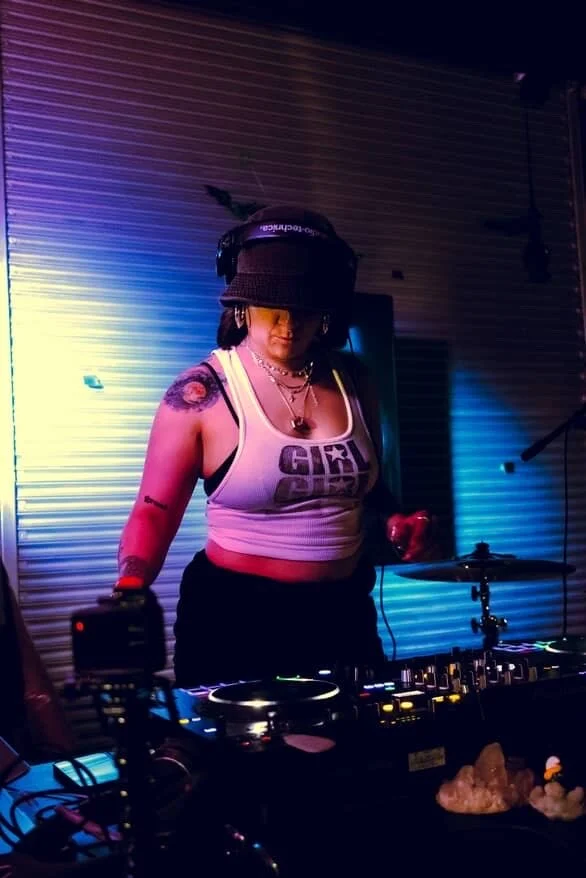
Cafeteria: What inspired you to become a DJ?
Connie Carmona: I was first introduced to DJing in 2005, but 2012 is when I really decided to make it my job and I started building my business from there. My partner Ian was a DJ and I would book and promote his gigs, so that was my connection to nightlife. Being a part of that scene, there were certain DJs I’d go to see and their connection and excitement for music was so contagious. It’s not just about playing songs, but it’s being so passionate about music that you want to share it with other people. Seeing those DJs, it made me go, “If I ever start DJing, that's how I want to do it.”
Kasey Cortez: DJing was something that was always bound to happen for me eventually. I’ve been a musician my whole life and have wanted to DJ since high school. I did a billion other things during my 20s, but I didn’t get around to it until I turned 30. My love for music and wanting to share that with others is probably the simplest answer. It’s the most fun job I’ve ever had.
Mariana Pelaez: I have always loved music. It's such an important part of my childhood and my family's big on music and dancing, so it's just always been a really important part of my life. I had a radio show at UCONN, so that also planted the seed. Zoe Jensen, also known as DJ QT is one of my best friends and is one of the co-editors of Connecticunt. When we started throwing Club Cunt parties, I wasn’t DJing yet, but I was still a big part of planning and putting on the parties. One day, I had the idea to do a Discoteca Cunt party, like a Latin version of Club Cunt. She suggested I use the party as an opportunity to DJ for the first time. There's no better time than the present. She showed me the basics and from there, I just ran with it.
Sonia Sol: I first became inspired to DJ while on my trip to Chicago in 2019. My friend Coryayo, who is a producer, artist and DJ, had a little numark controller. I was intrigued by the low pass and high pass filter on the controller. From that point, I was obsessed with the idea of mixing songs together, as that was my first time actually seeing someone mix two tracks in front of me. After that I purchased a controller and started practicing. I went back to Costa Rica and saw two female DJs, Ry Toast and Mama Nacha. That moment solidified for me that I can really do this as a woman.
Becoming a DJ feels like an elusive and mysterious industry. Can you break down how you got started?
Connie: I was already in the thick of New York nightlife because of my partner. I would often keep him company in the DJ booth because 10pm - 4am is a long night. One night, we were at a club and he wanted to take a quick break. He showed me how to play a few songs, but I was still at the beginning of my DJ journey. I was like, “All right, cool. I got this.” I had my two songs queued up, but by the time the songs were finished, he wasn't back yet. I started freaking out a little because there’s this whole dance floor of people in front of me and I was up there all alone. I told myself, “I know how to read a crowd, I can do this.” 15 minutes later, he finally came back and it was so crowded that at first, security wouldn't let him back in, but he eventually he was able to convince them that I was his girlfriend and he was actually the hired DJ. When he finally came back to the booth, he’s like, “That sounded really good, you could hear it from outside. Do you want to keep playing?” The entire time I thought I was going to pass out, my heart was beating out of my chest. From that day on, I knew I wanted to do that forever.
Kasey: I decided to really go for it, then I asked any and everyone I knew to help me learn. I bought the cheapest entry level equipment possible, sat my butt down and practiced until I didn’t suck. I dug for music for months and practiced more and more. I was given an opportunity to play somewhere local to start to get my bearings actually DJing out in public. I kept playing out every chance I got, I carried business cards everywhere, telling everyone that if they ever needed a DJ to call me. I was really forward and not shy at all in the early stages of my career. How will people know that I’m doing this if I don’t tell them? The industry can feel elusive for sure, but I just elbowed my way into the room.
Mariana: Zoe taught me how to use her DDJ 200 and from there she showed me the basics. The internet and other DJ friends were also great guides. The more DJs that you can watch and learn from, the better. You can learn techniques and skills because everyone has their own style. Everything they do may not apply to you, but there's always a different way to do something. There's always a new, cool transition that you've never tried before that someone can teach you, there's always a better way. I'm a big proponent of jamming with other DJs whenever you can, especially DJs that are your friends because it's fun and such a great way to learn.
Sonia: Once I went back to Costa Rica with my new numark controller, the pandemic happened. At that point, everyone went into lockdown. Luckily, I had just purchased the numark controller prior to everything being shut down. This allowed me time to actually practice every single day. I would sit and watch tutorials on YouTube and live streams of different DJs at home. The pandemic for me was a blessing in disguise. While it was extremely difficult financially, I was blessed with the opportunity to pick up a new skill. Prior to DJing, I was already performing with my band as a singer, just doing live music. Once everything opened back up after covid, I proposed the idea of doing live DJ sets to a local establishment called Vida Hermosa where my band and I were singing regularly. I started my own party there on Sundays and the rest was history.

Image courtesy of Tropicali Media
Do you think the DJ industry is male-dominated? If so, what obstacles have you come up against?
Connie: It’s a lot better now than it used to be because I definitely see a lot more female DJs now than when I started, but it's still male dominated. There weren’t as many when I started. If you did see female DJs, they weren’t always getting the respect they deserved. For girls, people treated it as a joke. If I was setting up my equipment, they’d ask if I was waiting for my boyfriend to get there, I’d tell them I was the DJ and they just wouldn’t believe me. When I was practicing, I worked twice as hard to make sure that I sounded good enough so when someone walks into a party, they’re not really thinking about who the DJ is. They’re just thinking, “Oh, it's probably just some guy. By the time they would find me, they would ask if that was me the whole time. If Ian was with me just hanging out or having fun, they’d assume it was him playing. It has gotten better over time, especially in spaces where you see more female DJs and inclusive collectives where women are playing huge events and stadiums. At the end of the day, it's still hard, it's not an easy industry to be in for sure.
Kasey: Yes, it’s male dominated. Certain markets and areas of the industry more than others I’d say. However, it’s shifting – you can see and feel it. The trope of "having to work twice as hard" still rings true in most instances, but I've also had plenty of men in the industry put me on and help guide me for no reason other than to be helpful. If you're good, hungry and care about what you do, people will want to help you out. Egos are a big obstacle I'd say, but that kind of stuff doesn’t really bother me, nearly every creative field is male dominated, so maybe I'm just used to it.
Sonia: Absolutely! However, I do think it really depends on the scene you are in. When I started to DJ, I was primarily playing in Costa Rica and in Hartford. I played a lot of Latin night clubs, hip-hop, dancehall and Afrobeats. I was surrounded by a lot of older DJs who would actually say things like, “you’re good for a female.” That statement in itself sums up the type of DJs I was surrounded by when I first started out. It certainly taught me a lot and how to stand up for myself. It was common for older men in the scene to hover in the DJ booth while I tried to do my job, touch the decks, and make misogynistic comments. I quickly got bored of that and created a new lane for myself and started my own events.
Is gatekeeping common?
Connie: Yes and no — it really depends on where you are and who you fall in with. There are some communities where there’s no gatekeeping and they just bring you into the circle, help you out and get you gigs. They share music and you're just always around them. Then there are other communities that may be supportive. but won't necessarily get you gigs. They're supportive of what you do, but they're never calling you, booking you or asking you to open for them. It can be hit or miss, I’ve had experience with both sides. Sometimes, there’s a lot of gatekeeping, then other times, DJs will welcome you with open arms.
Kasey: Yes it’s still a thing. I think it’s a generational mindset thing and also depends on what part of the industry you’re working in. I’m anti-gatekeeping. If you ever see me out, please ask me any DJ or music questions. I feel like if we can help each other out, we should.
Mariana: The Connecticut DJ scene is very collaborative. There are so many DJs putting each other on and uplifting each other. I've never felt any competition from other DJs. Everyone in the Connecticut scene is very kind, we want to see one another succeed. There’s especially a lot of love from fellow women DJs. It’s always, “Here come try this, come learn this, come open up at this event.” Everyone is very supportive.
Sonia: Again, I think this depends on the scene you are in. I do find the DJ community to be helpful to one another, especially in this global electronic/global sounds scene that I am currently in. The DJ world has changed drastically in the past few years, with social media, and in a post-pandemic world. The shift is quite strong. I have seen people gate keep for sure, but it’s all about the people you surround yourself with.
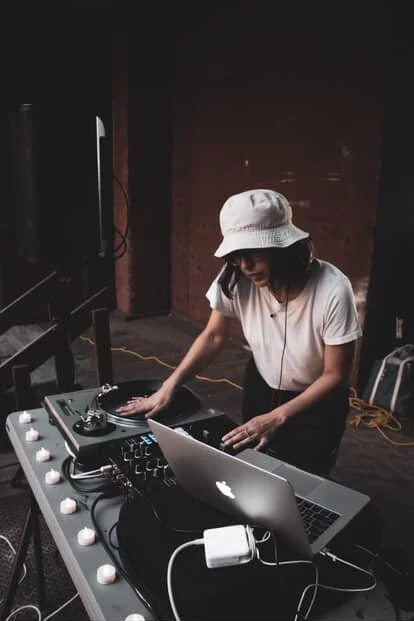
How do you push through self-doubt as an artist?
Connie: I go for a long walk outside. Walking or being in nature seems to help with everything! I take a break from social media because scrolling can fuel a self-doubt spiral. Sometimes, listening to a DJ podcast helps, hearing other DJs talk about similar experiences and challenges helps you feel less alone, like "Oh ok cool, I’m not the only one that feels this way!" Lastly, I remind myself of what I have accomplished — taking a trip down memory lane can really show you how far you've come and help you remember to be proud of yourself and your body of work!
Kasey: Sometimes I don’t push through. Sometimes I exist squarely inside of my overwhelming, near crippling self-doubt. Sometimes I almost rot in it! And then, I remember doubt is invisible, fake, silly and dumb. There is truly only one me and every person has a completely unique point of view that’s worth sharing and experiencing. If I’m just living in my truth, then there’s nothing to doubt. I’m also very big into approaching the artistic process without attachment to the outcome. It’s important to just try things in life for the sake of living and experiencing the small passing moments of your life.
Mariana: Being co-editor of Connecticunt and one of the organizers of Club Cunt gave me a huge step up. When I first learned how to DJ, I already had my first gig lined up, so I was learning in order to prepare for a specific day, whereas I feel like a lot of times it's the opposite — you start learning and then you try to find gigs. I feel very blessed and lucky that I get to play Club Cunt all the time — there's always a crowd. It's always a blast. Through that, I was able to build a name for myself a little bit, but the self doubt was still there. Before my first set, I was so panicked and even now, there's still moments when I get really nervous before a set. The reason why I love the art of DJing so much is because it's literally just for fun, if I'm having fun, if I'm playing stuff that I would want to dance to, most likely, people are going to have fun and they're going to want to dance along too. That's what I always try and remind myself. I'm doing this because I love music. I need to just trust in my taste and skills that it's going to go great. No one is showing up with the intention of judging me or nitpicking my set. If people are pulling up, it's because they want to have a good time and they want to dance. So all I need to do is deliver on that. There are a lot of art forms where people are a lot more judgmental, but at the end of the day, who cares what they think? If the majority of people had fun and I show up prepared, there's no reason to self doubt.
Sonia: I just keep going. That sounds cliche, but there is no time to slow down. We aren’t getting any younger and time moves quickly. I just love and enjoy this artist's life too much to let self-doubt get in the way. I do journal often, which I find helps calm my mind and reset things when I get overwhelmed and stressed. I’m just grateful to be alive and I try to remind myself of that when I let silly little things get into my head, especially with this toxic era we are in with social media.
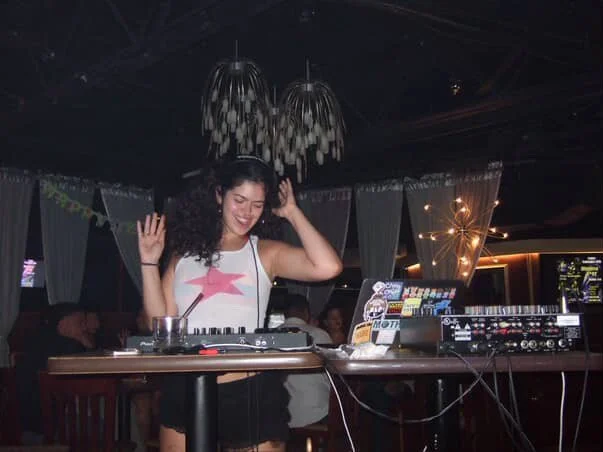
What kind of principles or vibe do you try to bring to the music community?
Connie: I've always been a music first type of DJ so I'm always trying to uphold its integrity as an art form. You're introducing people to new music you're creating. You try to create a relationship with your crowd where they trust you enough. You're going to play the music that they love, but you're also going to introduce them to something they've never heard before that they might also like. I don't think DJs are meant to be a jukebox. I don't think they're meant to be there just to take your requests. I truly believe in sharing music with people, which inherently makes you very vulnerable. I also want to create a safe space for people, whether that’s physically or emotionally. I wanted to create a space where someone could come to my gigs by themselves. They might not have anyone to go with, but because I’m playing, they’ll show up. I’ve had people say that to me and it’s really special because it means that I do create spaces where people can come in a group of 10 or a party of 1. By the end of the night, people would be talking to each other, dancing and hanging out next to me. Making people comfortable has always been my priority.
Kasey: I try to bring child-like wonder to everything I do. Being curious, playful and open has brought me many beautiful, pure moments of joy within my community and my work.
Mariana: My biggest focus is Latin music because that's what I know and love. It's some of the best music in the world to dance to, so I really like to bring in global sounds with a special focus on Latin music because it's what's close to my heart. I also try to blend as many different genres as I can. I love going from UK drill to Brazilian funk to dembow. It’s an amazing celebration of all the different kinds of music that’s out there, especially genres pioneered by people of color. The best music in the world is being made by people of color. For me, dancing and partying is an act of community and celebration. Keeping it fun and bringing in the joy. We're in some really dark times, especially the immigrant community and the horrible atrocities that are happening. I feel very blessed and lucky to be the child of immigrants. Because I was born here, I don’t have the same fears that a lot of immigrants have right now. That means I have the responsibility to be out here, loud and proud and celebrating my culture in a way that maybe not everyone can right now.
Sonia: I want people to feel free and feel their true inner child when they are out on the dance floor. Music is healing in so many ways. I believe it's a very spiritual experience to get lost in a song, especially with others. This is why I started Camp Sol, which is all about being in nature with good music, good people and feeling true freedom and creative expression.
What advice would you give to aspiring female DJs? How can they get started?
Connie: Practice, practice, practice! DJing is an art form that takes time to truly learn. It has become more accessible and much easier to start these days, but there are certain aspects that come with experience and paying your dues. DJing is about storytelling, it’s about weaving together songs in a way that connects with a crowd, elicits a reaction — a smile, a head nod, a two-step, a memory, a mad dash to the dance floor. It's more than just choosing music, it's making sure you are playing quality files or records; that your speakers sound balanced, clear, warm and the volume is appropriate for the room; paying attention and adjusting as needed. Beyond all else, I would say find your sound, what makes you happy, what it is that you want to share with an audience and stay true to who you are. Sometimes, that road can feel lonely or like an uphill battle, but it's worth it in the end. Never feel obligated to continue working with a person or venue who makes you feel unsafe or uncomfortable.
Kasey: Practice and get good! Treat learning how to use your controller and software as if you were learning to play a new musical instrument. Nothing matters if you haven’t put in the time. Start with mixing two songs and go from there. Go out and watch other DJs really closely, try to pick up on any new little technique or trick you notice. In addition to YouTube, there’s also a few online platforms with a ton of instructional programming like Crossfader or Six Figure DJs, which are both great resources for beginners. Seek out local DJs who are working in the lane you want to be in, they will likely be happy to help or guide you. Make it known what you do, you never know who you’re meeting and who will be able to help you out. Be creative about where you might be able to play to gain experience, exposure and eventually regular paid gigs. Make it a priority early on to create a sustainable system for yourself to manage your ever-growing music library. Always keep your ears open.
Mariana: Going out is the best way for me to find new music and get inspired. Making friends in the DJ community has been the biggest way that I've learned. You can scroll through TikTok, but there's nothing like hanging out with another DJ and watching how they actually do it. One of the ways that I learned the most is when I start mixing, not just the songs that I have, but when I play around with somebody else's library, I learn so much. You never want to put yourself in a box and feel like you can only do one specific style. That goes for genres too. If you're a true music lover, it’s important to explore different genres. I'm always trying to push my comfort zone and try different things. My biggest advice is just do it because it's so fun. The board can be very intimidating to look at, but once you know what everything does, you just learn so quickly by playing and exploring. When you’re practicing in a small setting, that’s the time to experiment, sound crazy and make mistakes. Don’t be afraid to mess around. It's fun if you let it be fun.
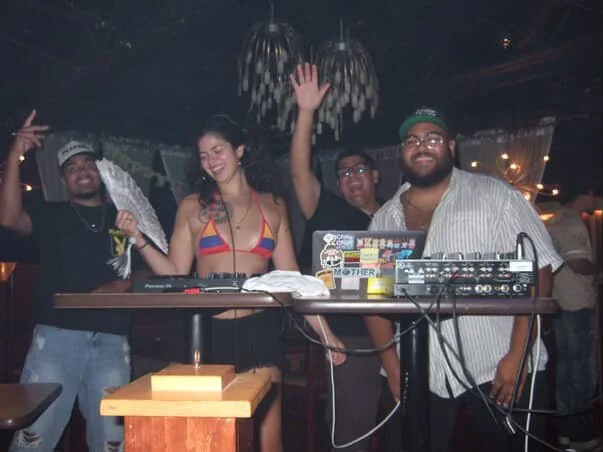
Sonia: My advice for female DJs is to buy yourself a little controller and practice mixing in your room, alone. Looking for a mentor is great, just don’t let that slow you down. Often, it feels like we have to wait for help or for the right time. The right time is never going to come, so just dive head first and have fun! You will be so surprised with how much you can learn on your own and with online tutorials. Never let a man in this industry discredit what you have built, it’s not uncommon to hear men rant about how it’s easier for women to get bookings because they are a woman. Again, while that may be true in some scenes, what I see in my community is hard-working women. Always work hard at your craft and never let a man discredit the work you put into this.
What’s your favorite part about being a DJ?
Connie: There’s nothing better than playing a song you really love and then someone comes up to you and says, “Oh my god, I love this song” or “I’ve never heard this song before, it’s so cool!” Sometimes when you play one of your favorite songs, you think no one else is going to know it, so you’re just playing it to have a moment for yourself. When it’s also someone else’s favorite song, it is the best feeling ever. It’s equally as amazing as having a whole room in front of you that’s dancing and sweating ad having the time of their life. At the end of the day, there’s nothing that compares to sharing music you love with others and witnessing their response. Playing someone else’s music very loudly for a room of strangers sounds like a weird thing in theory — nothing about it should be fun, but there are times when it all clicks and nothing can match it. It’s even better when someone asks about a song one of my friends made and I can share their music with others — that’s the coolest feeling.
Kasey: I am just so blessed. I get to play music, party and enjoy life for a living! It’s as fun as it sounds. I take none of it for granted!
Mariana: Watching people dance and just the community it creates. Not only is it so fun to see my friends dancing, but I love meeting people through DJing. My heart sings when people come up to me after a set and are like, “Wow, this is exactly what I've been looking for.” It makes me feel so happy and fulfilled. When you play a certain song and you can visibly see people dance and groove along, it’s like, “yes, that's all I want.” That's the best high.
Sonia: My favorite part about being a DJ is the energy! Connecting with the crowd gives me literal goosebumps. You can feel the energy move in the room and we are the conductors. We control the vibe, we heal, we spread love and light! I will never forget after a set a few years ago, I had someone come up to me and say I saved their life through my music. That statement shook me because it showed me how powerful music truly is. I love to share this experience with others. This human experience is such a beautiful thing.