

NXTHVN FINDS “GLORY” IN THE BLACK AMERICAN HOME
CAFETERIA SITS DOWN WITH CURATORS TARA FAY COLEMAN & JUANITA SUNDAY TO DISCUSS BLACK JOY & THE POWER OF COMING HOME
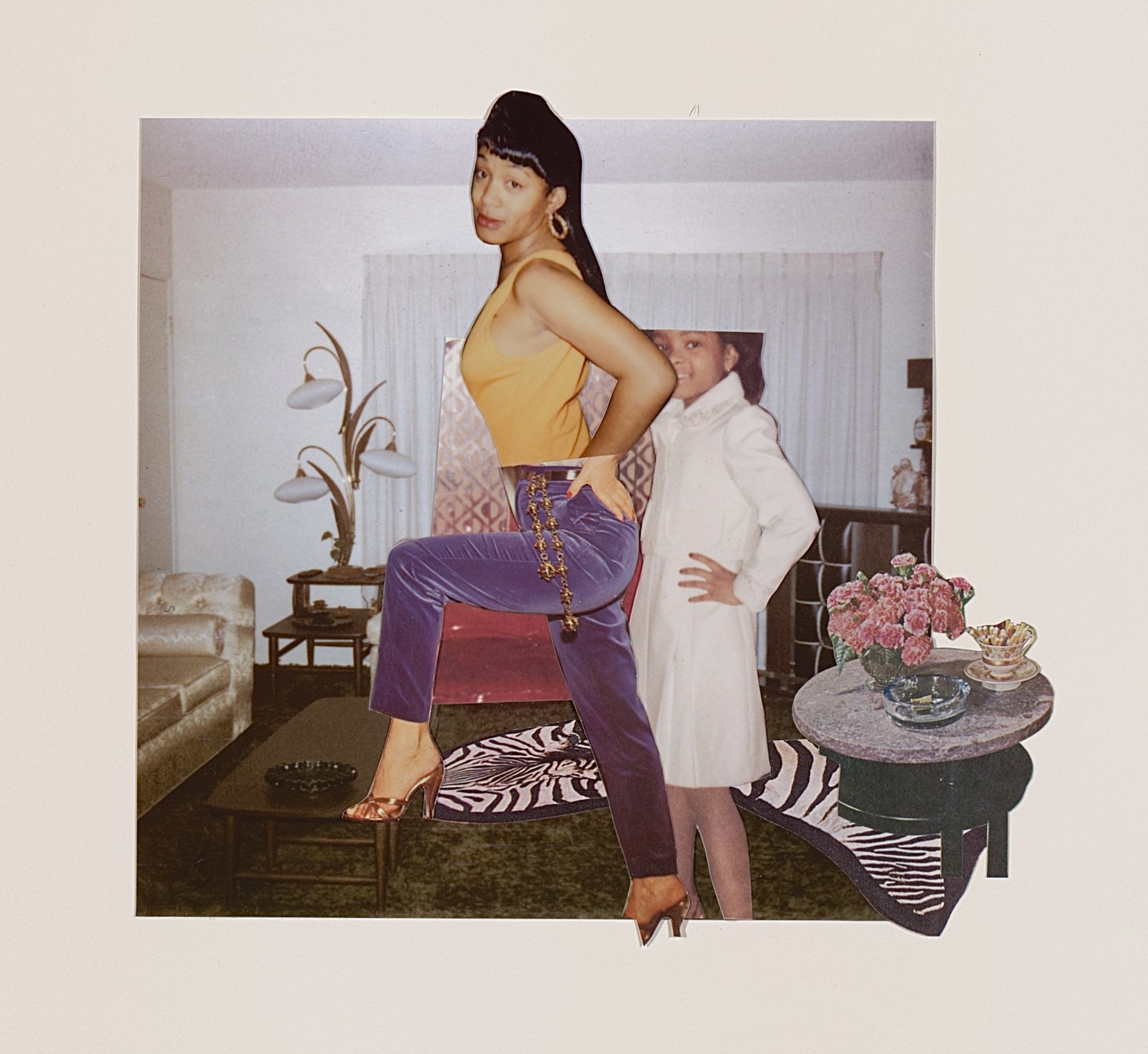
Bria Sterling-Wilson, Auntie’s House (I wanna be like you when I grow up!), 2025, courtesy of the artist and Galerie Myrtis.
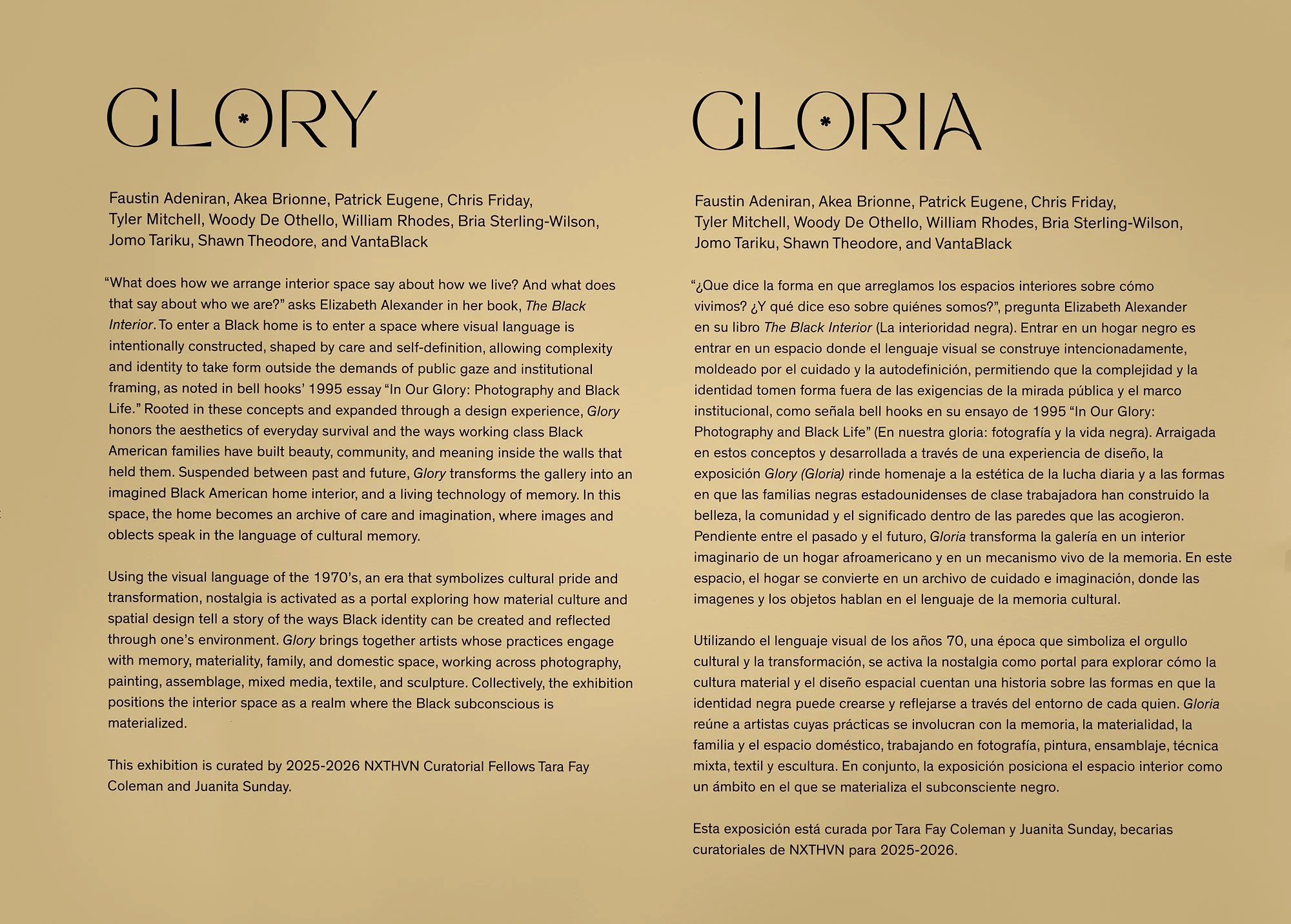
More than just a safe space, the Black home is a living and breathing testament to our history, carrying culture in blue cookie tins and pride in Black Santa Clause figurines. NXTHVN curatorial fellows Tara Fay Coleman and Juanita Sunday pay homage to the Black American home with the exhibition, Glory, creating a conceptual and immersive version of a Black home in the 1970s. While the time period mirrors the tense times we find ourselves in 50 years later, Coleman and Sunday decided to focus on joy rather than trauma, highlighting the pride Black people took in creating beautiful spaces and inner worlds in contrast to the ugliness of society. “Initially, I was considering heavier themes because we are in a very fraught political climate, however, the idea of Glory brought me such a sense of joy,” Tara shares.
For many, coming home is like taking a mask off, shedding the weight of the world as soon as you step through the front door. For people of color, especially Black Americans, coming home means shedding your armor and seeking safety from an often violent world. “Who are we outside of the exterior things happening in the world where Blackness can just exist? Who are we when we’re with our families and loved ones where we can take off that mask? For me, that was the inspiration behind Glory, capturing the intimacy and love within the Black home,” Juanita adds.
When the world makes you feel like a stranger in your own skin, like your very existence is a crime, coming home is a way of returning to yourself. You can land safely on the softness of the shag carpeting and find warmth in the wood-panelled walls. Within the safety of home, you can take pride and glory in your personhood and in your Blackness.
Our team sat down with curators Tara Fay Coleman and Juanita Sunday to discuss NXTHVN’s latest exhibition Glory.

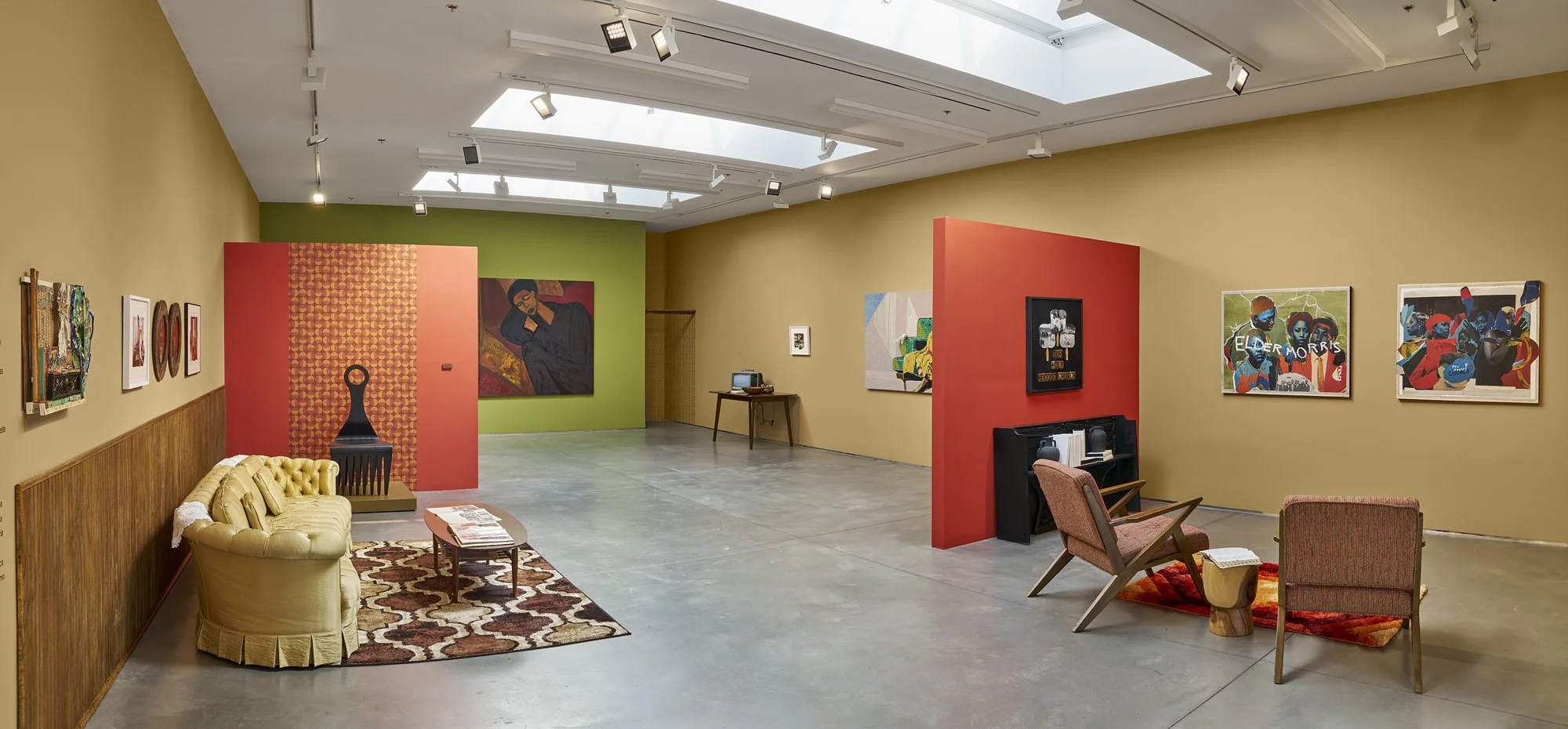
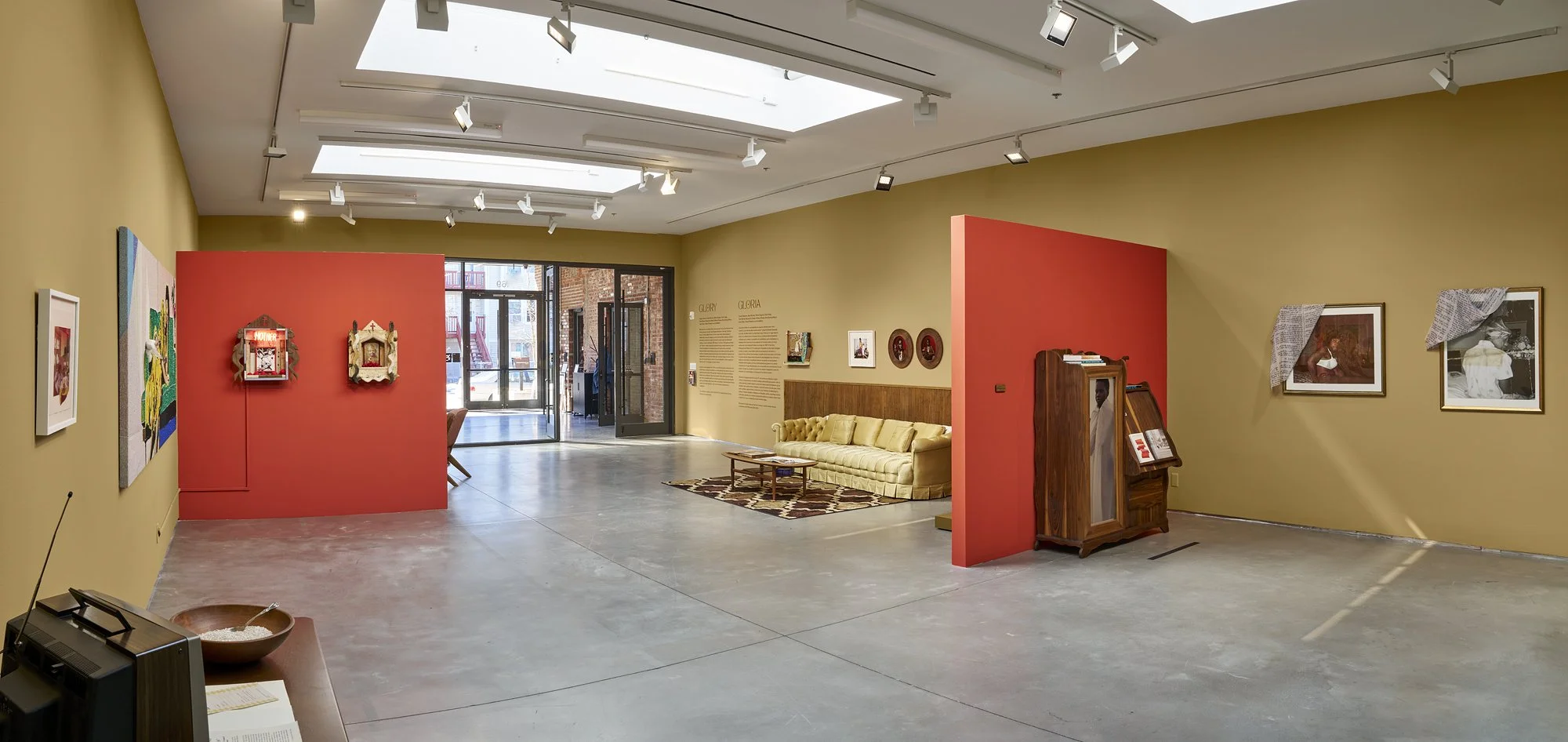
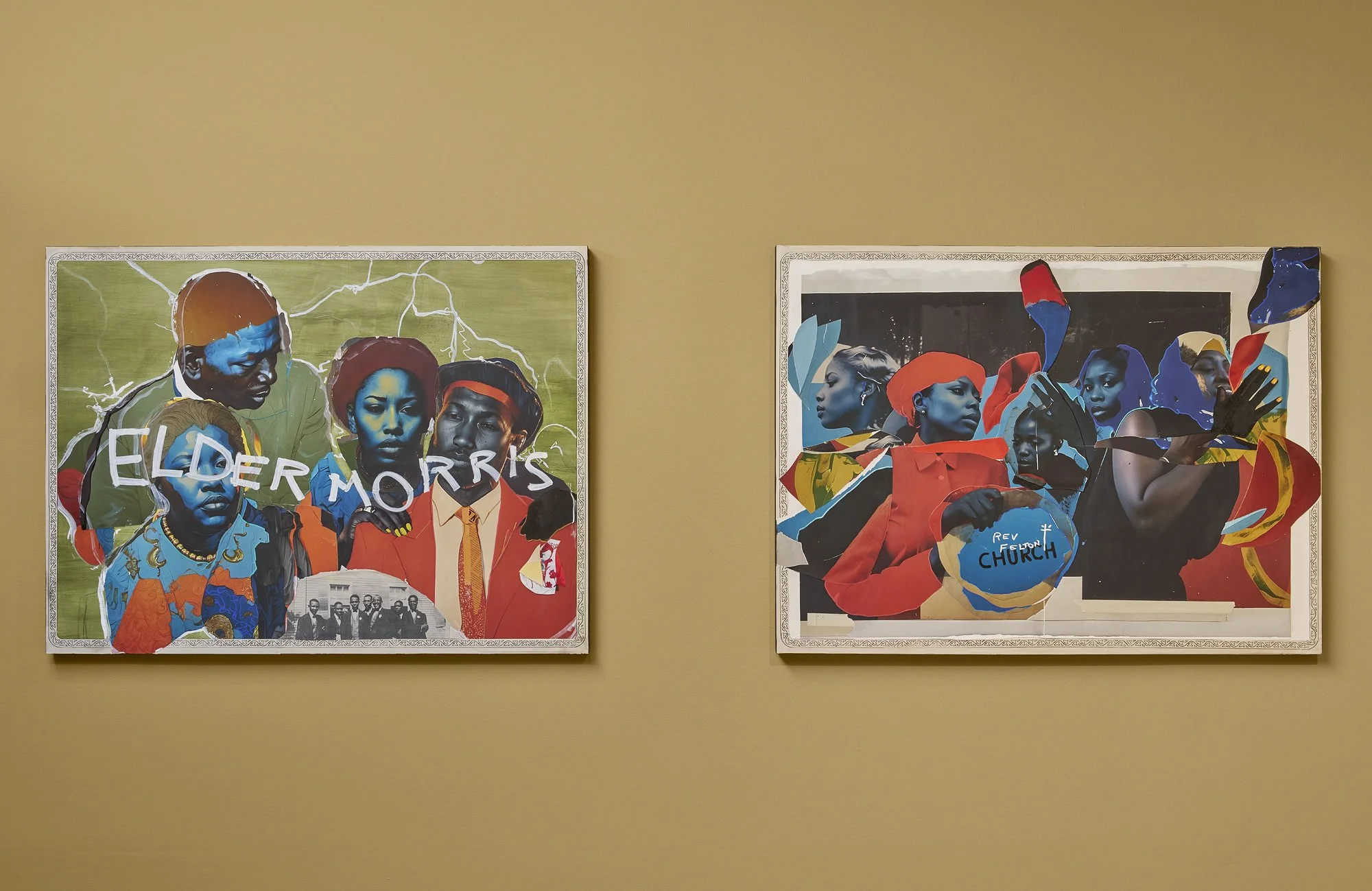
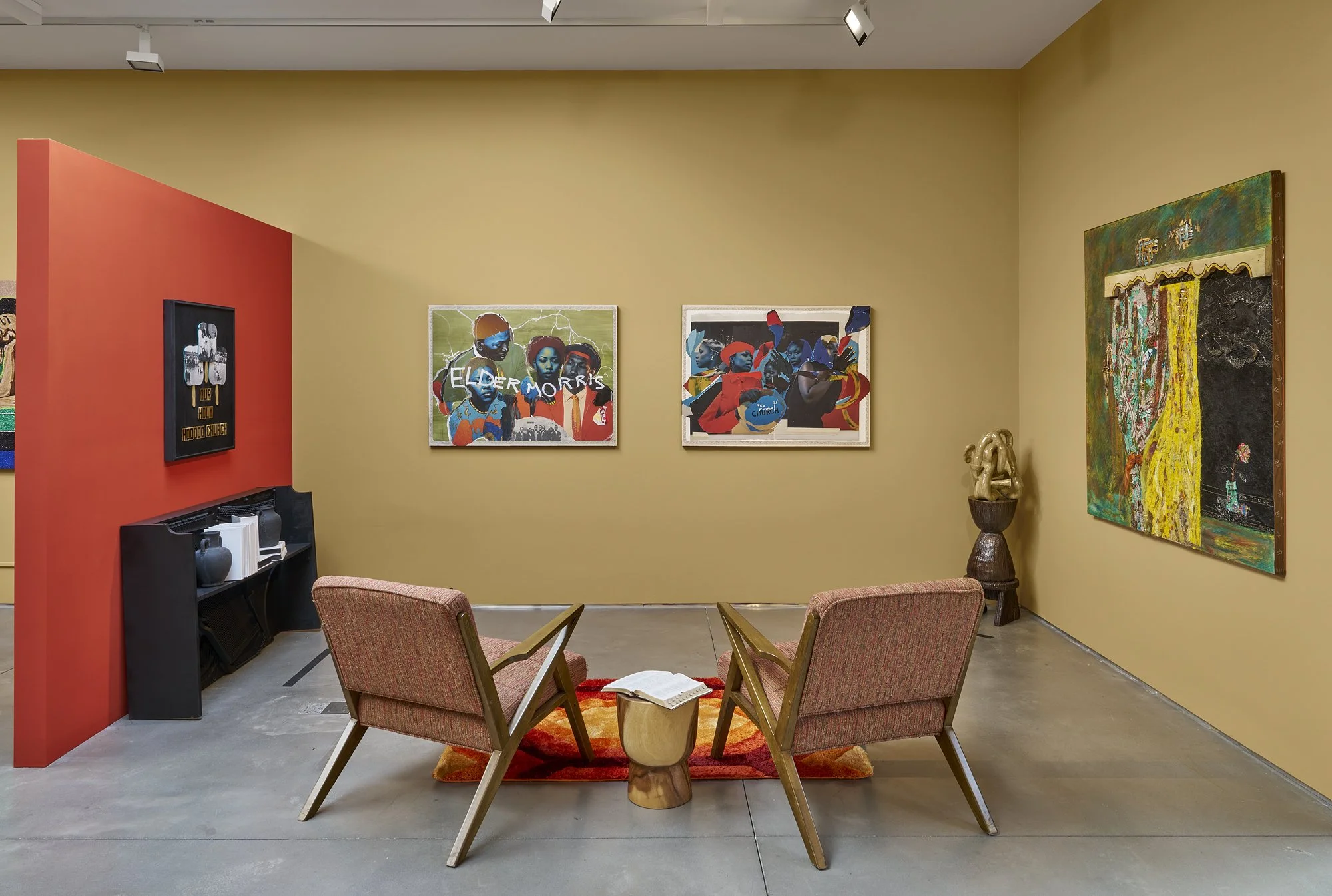
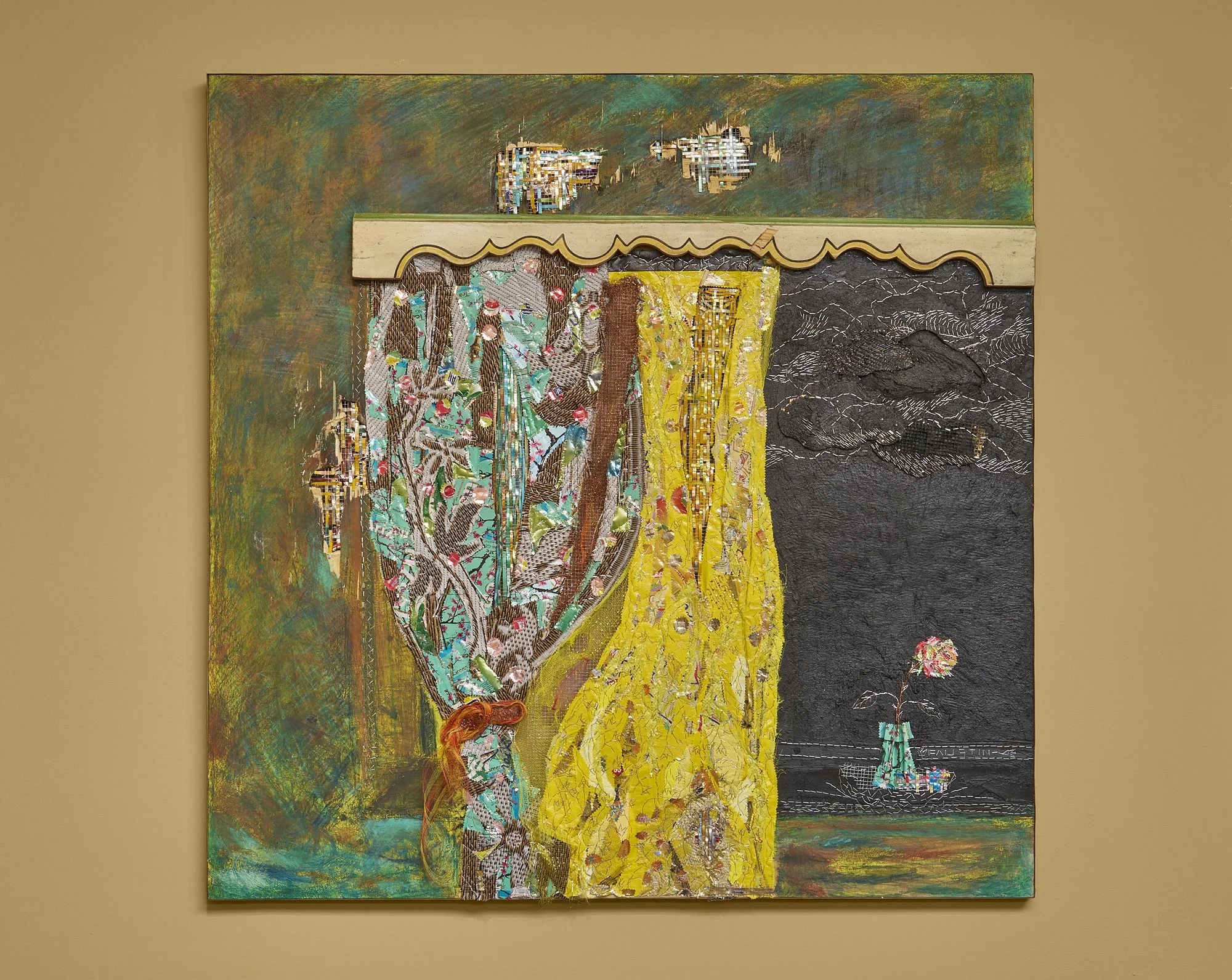
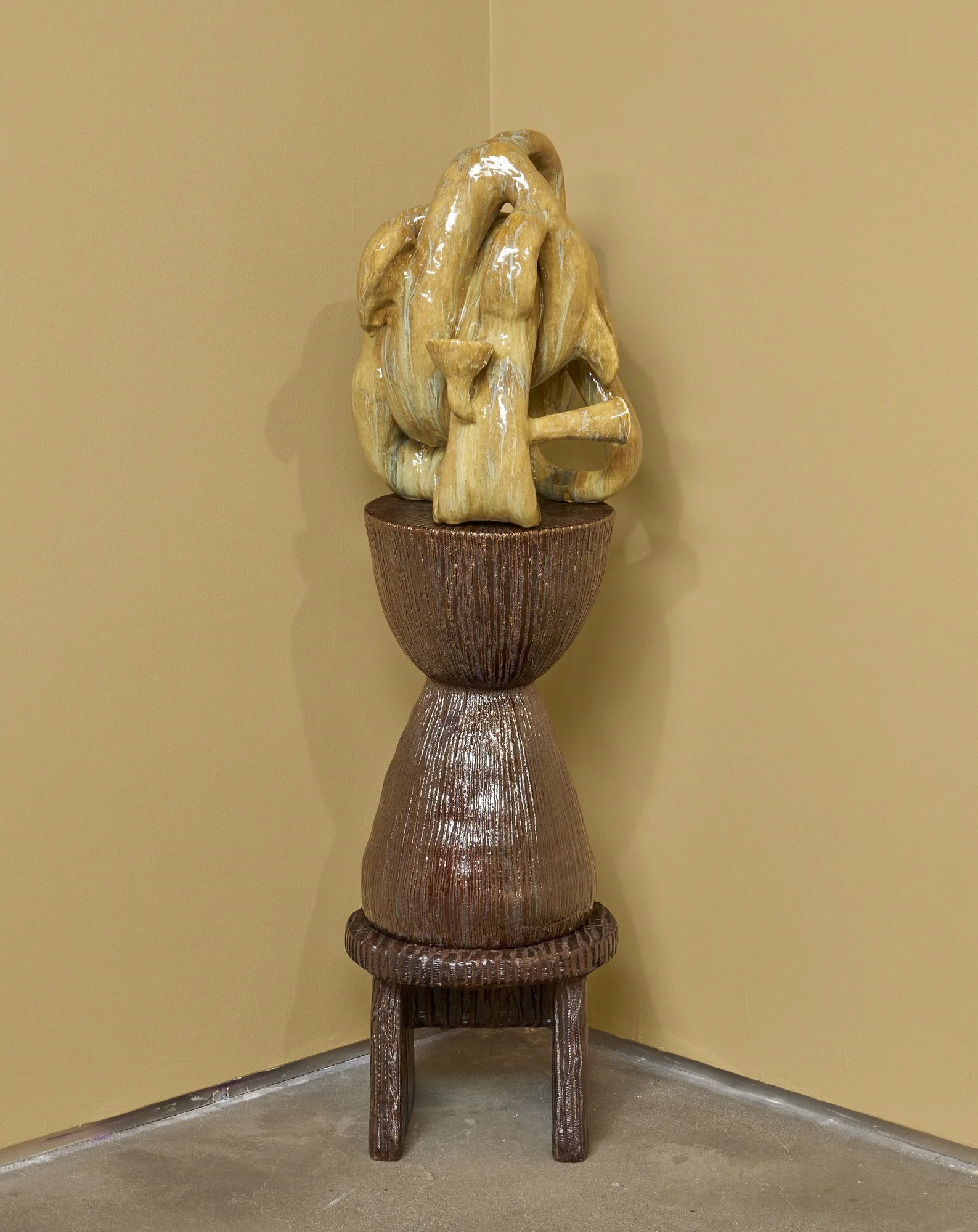
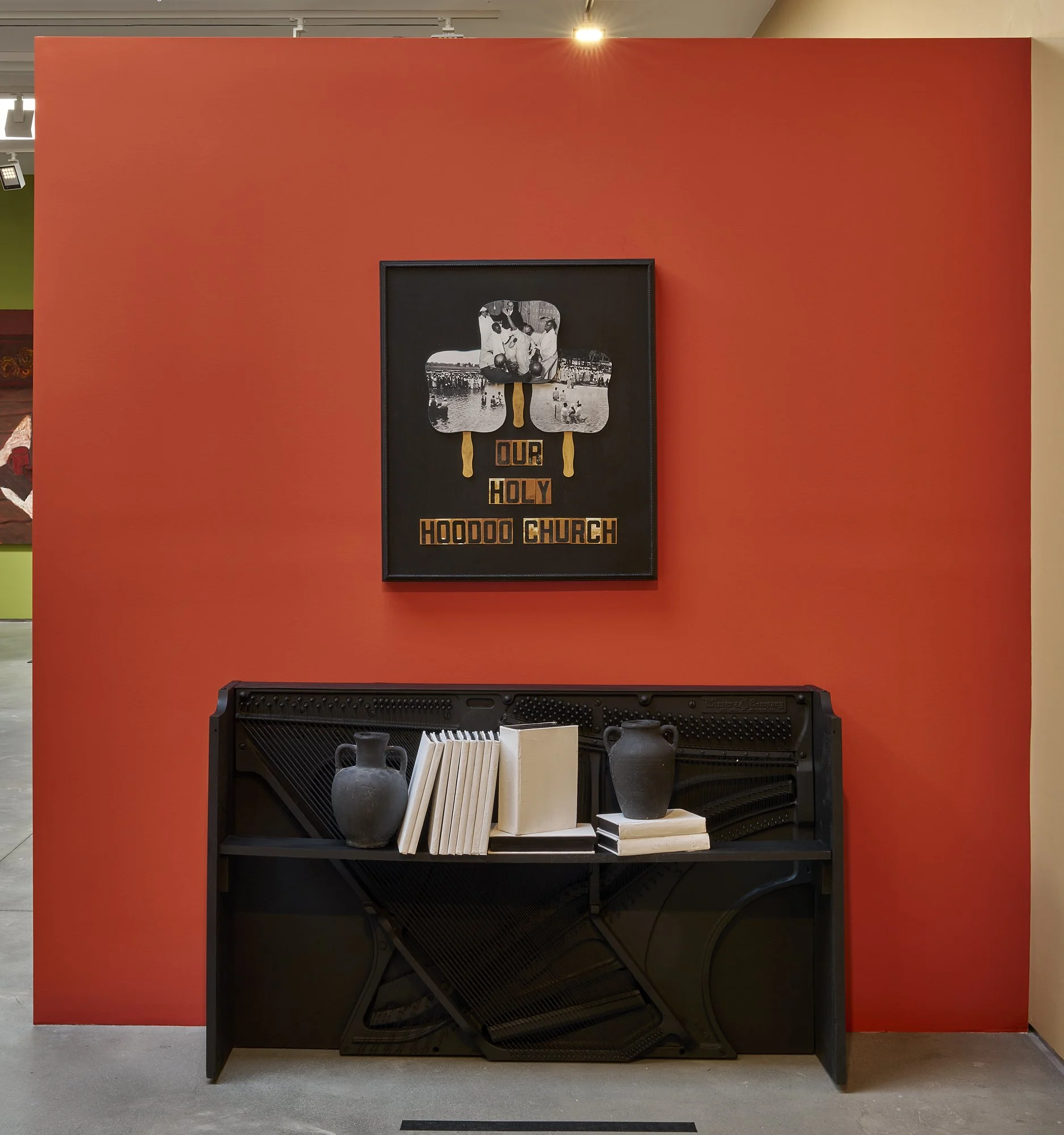
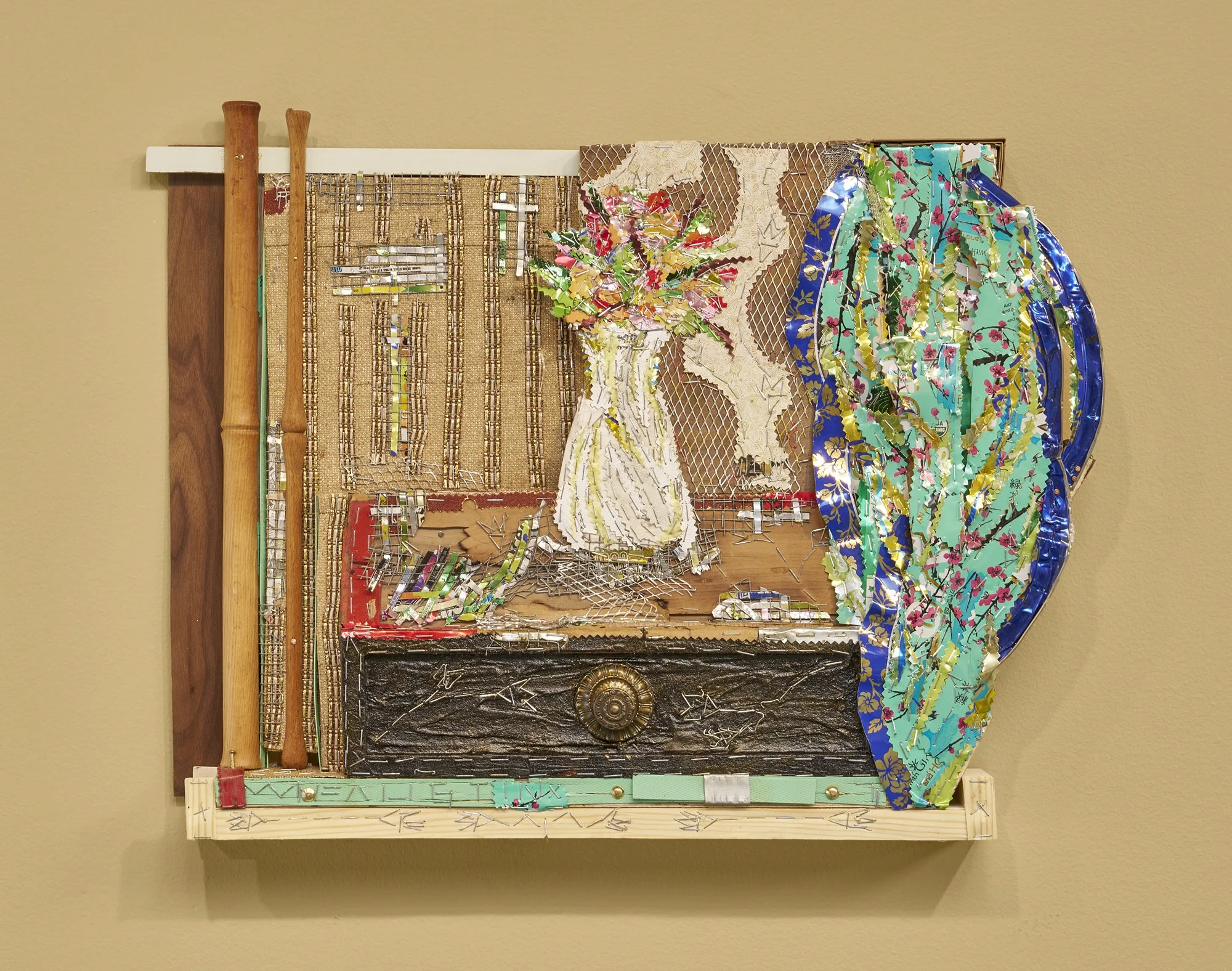
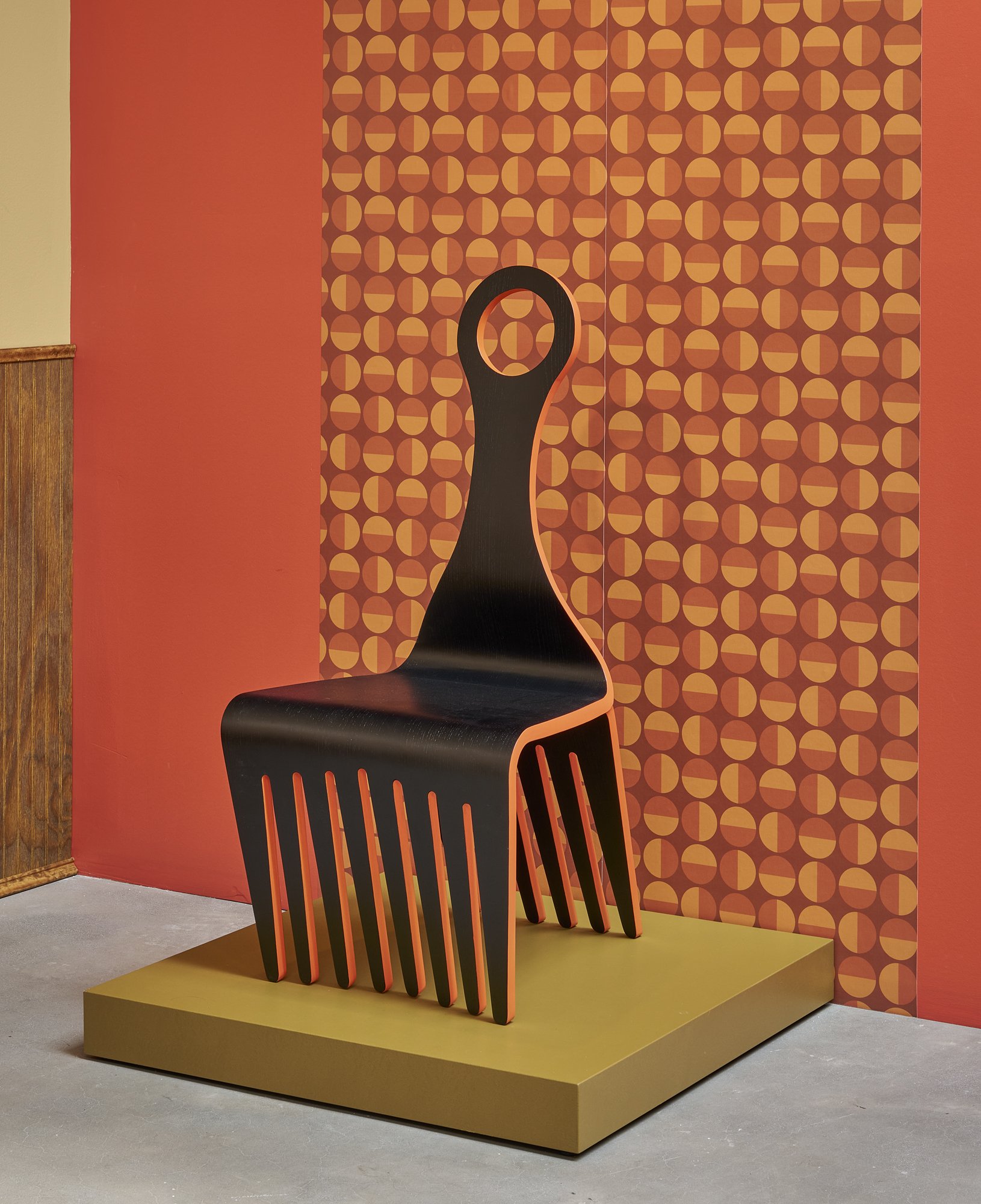
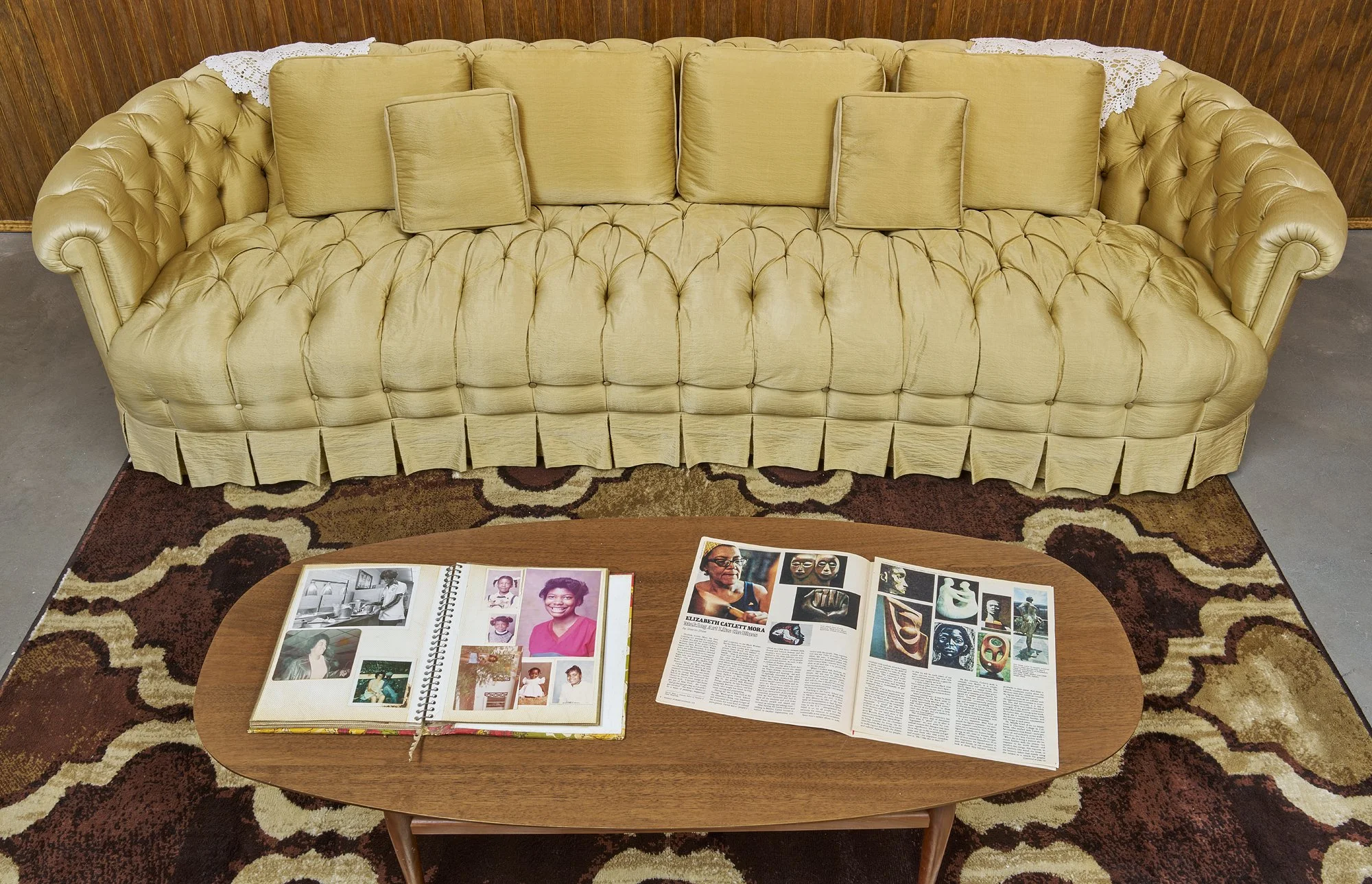
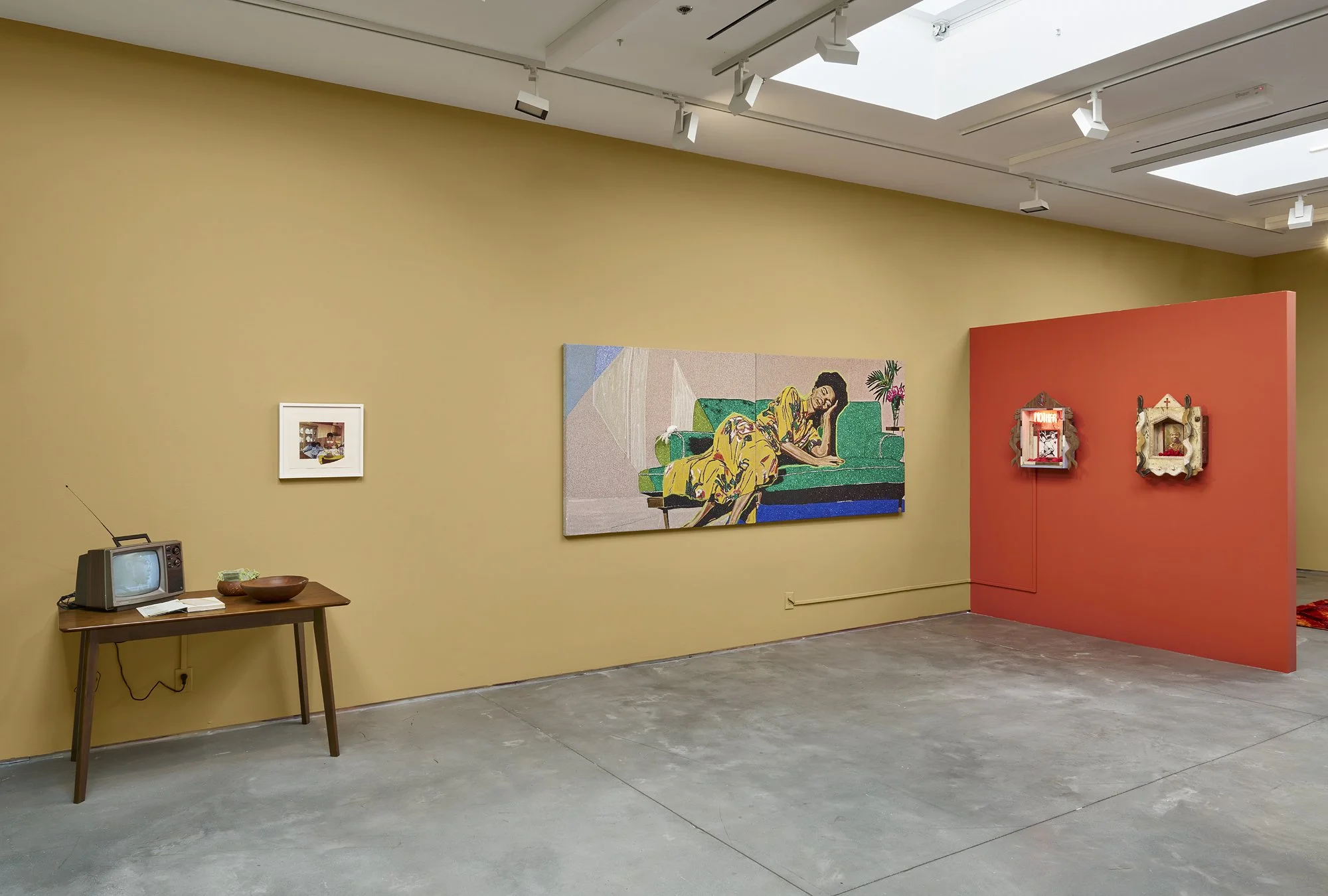
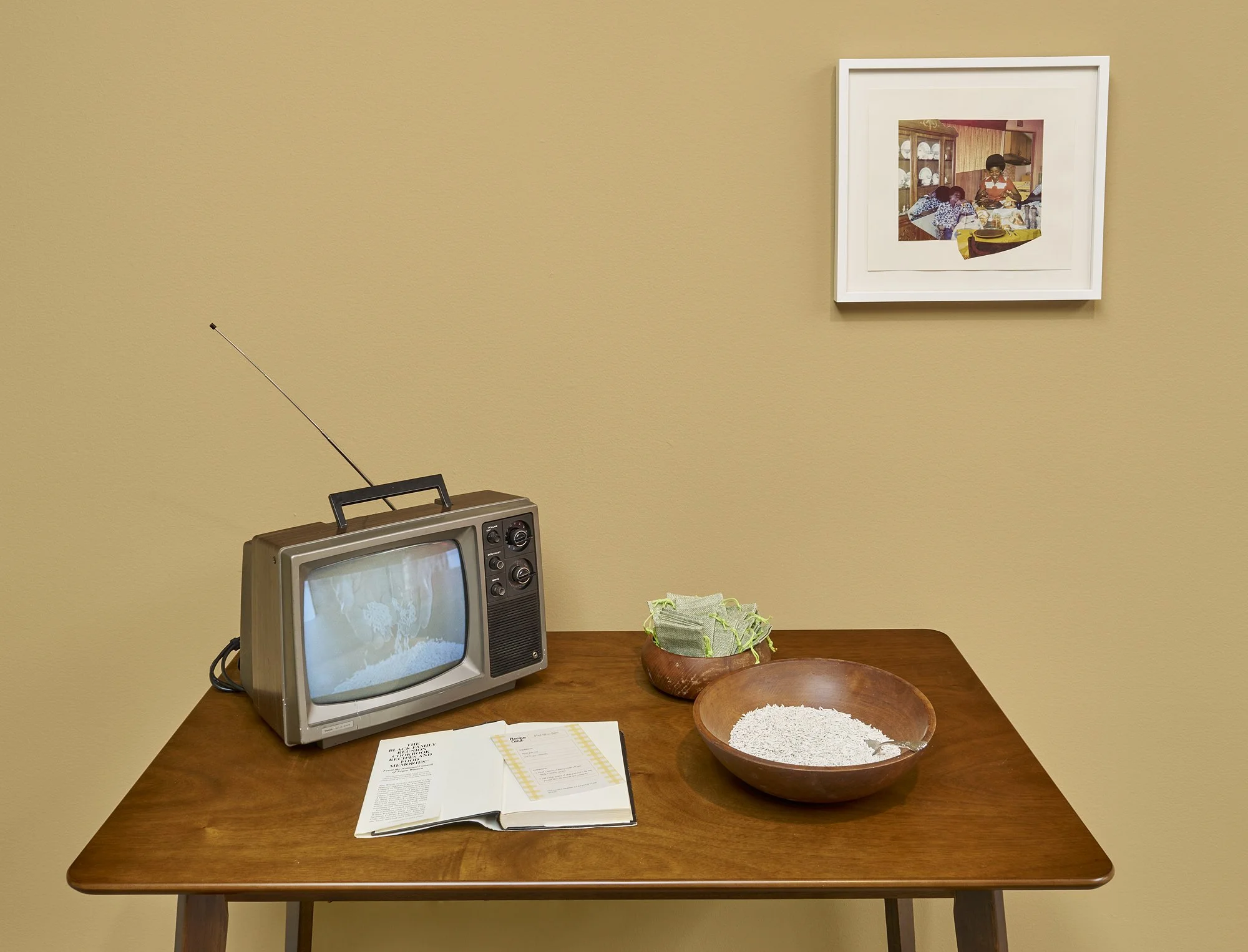
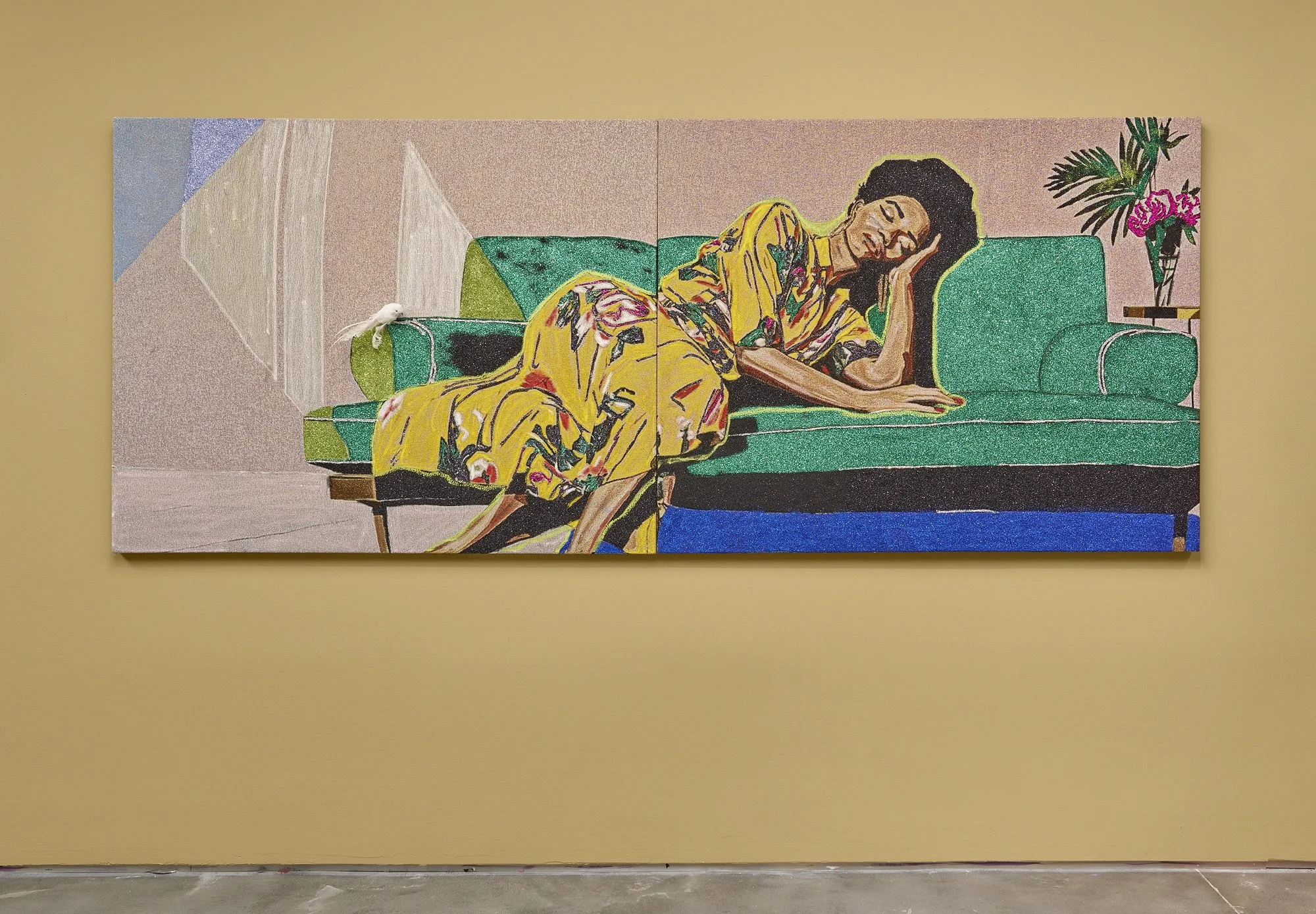
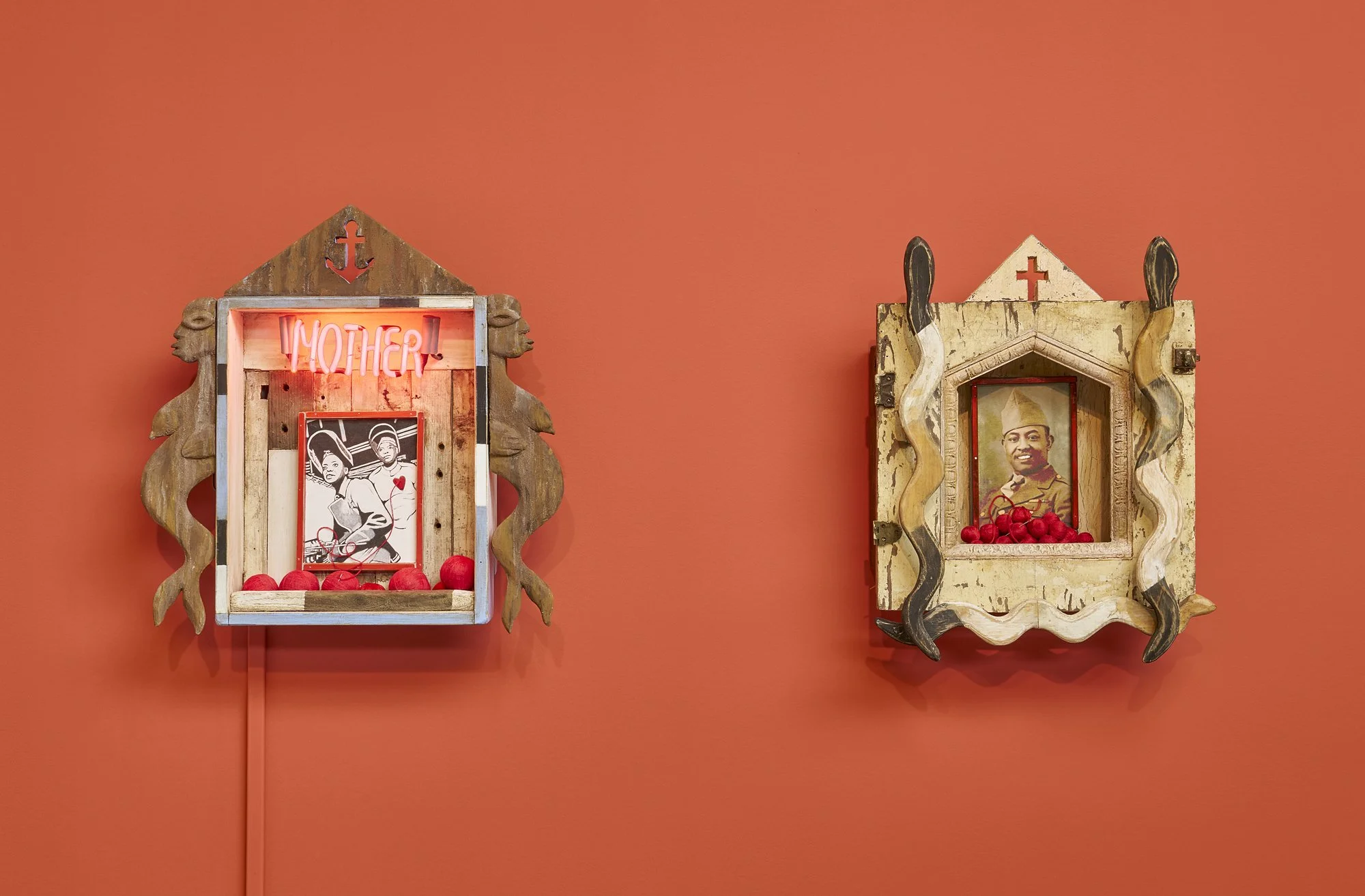
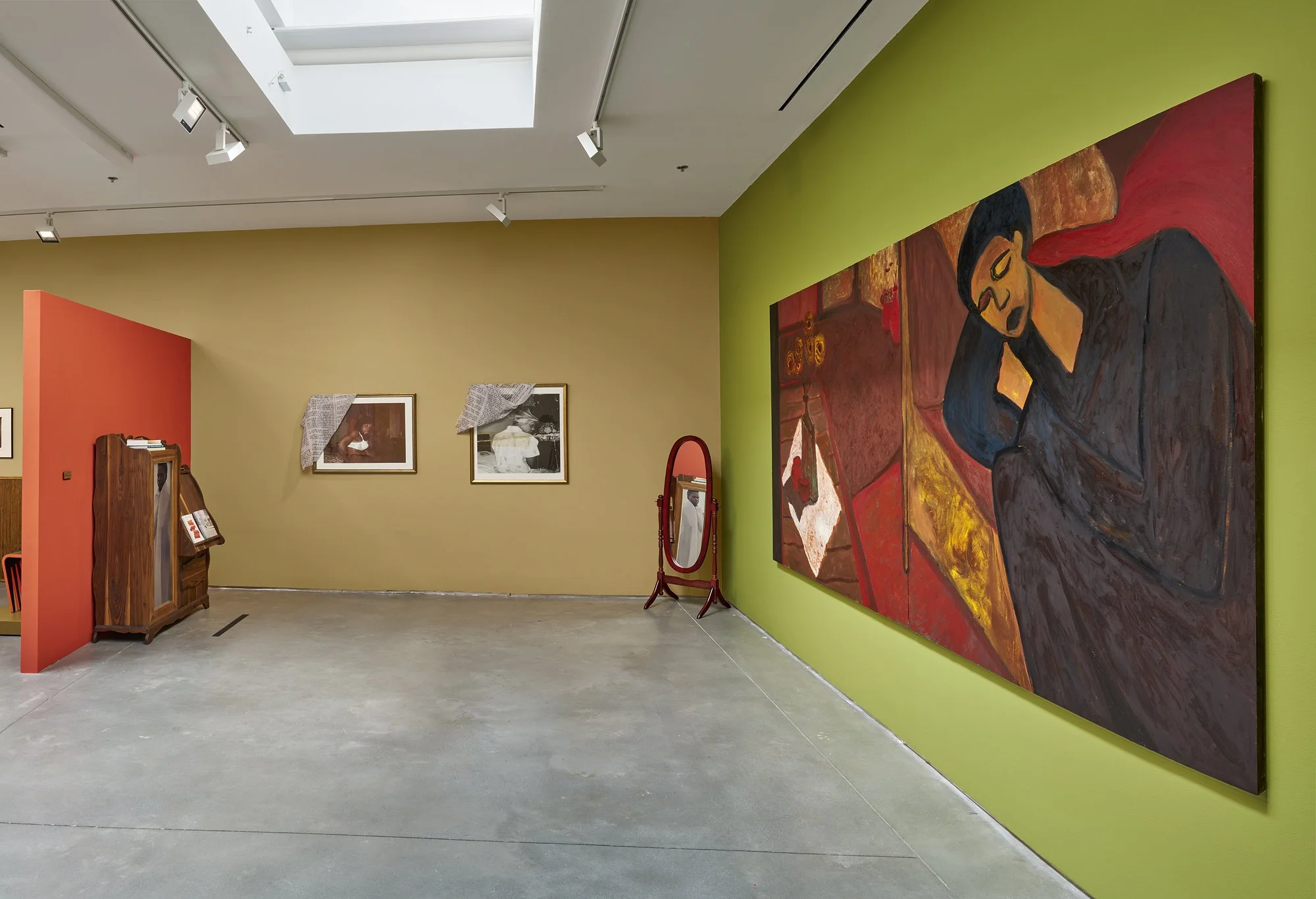
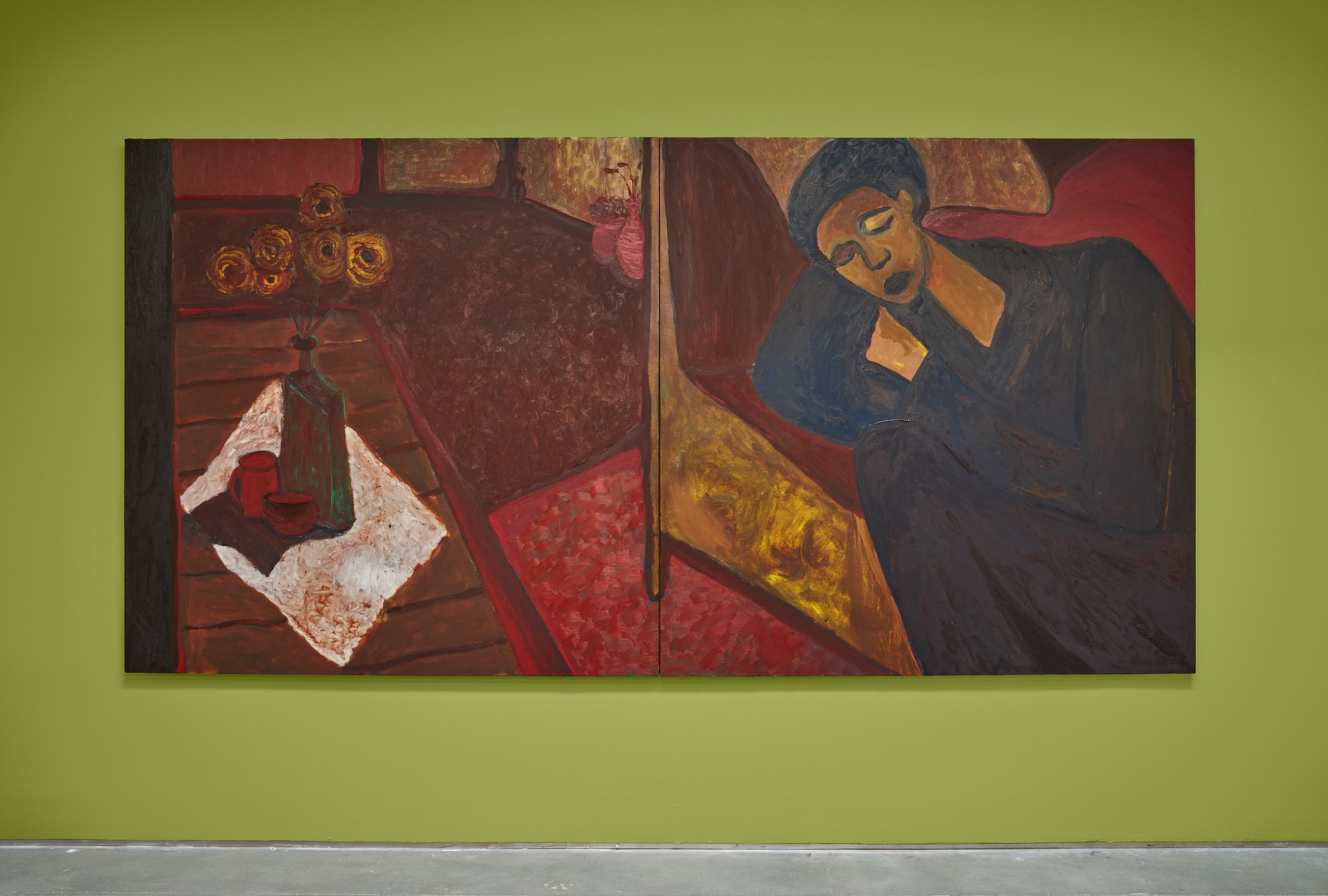
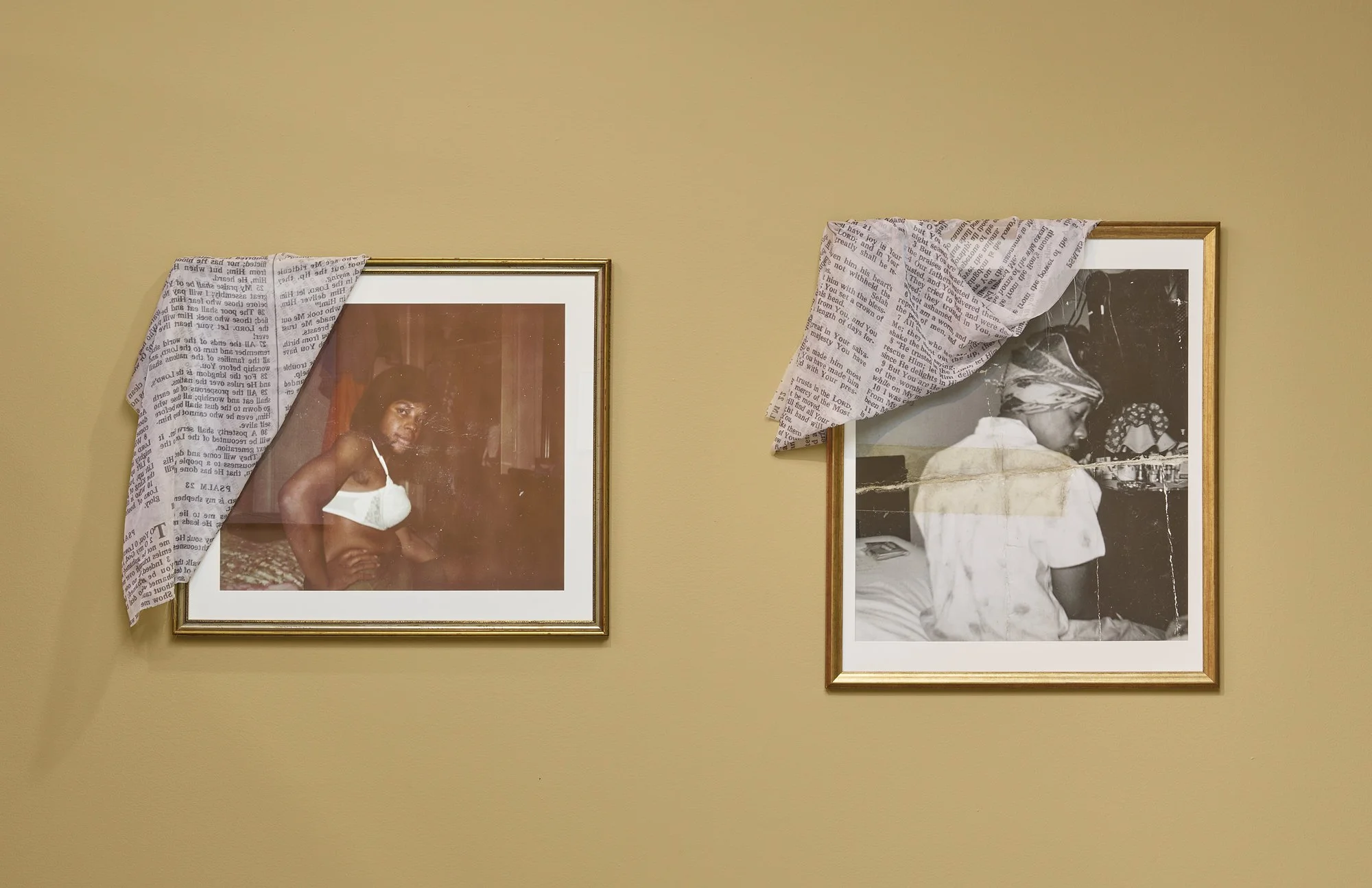
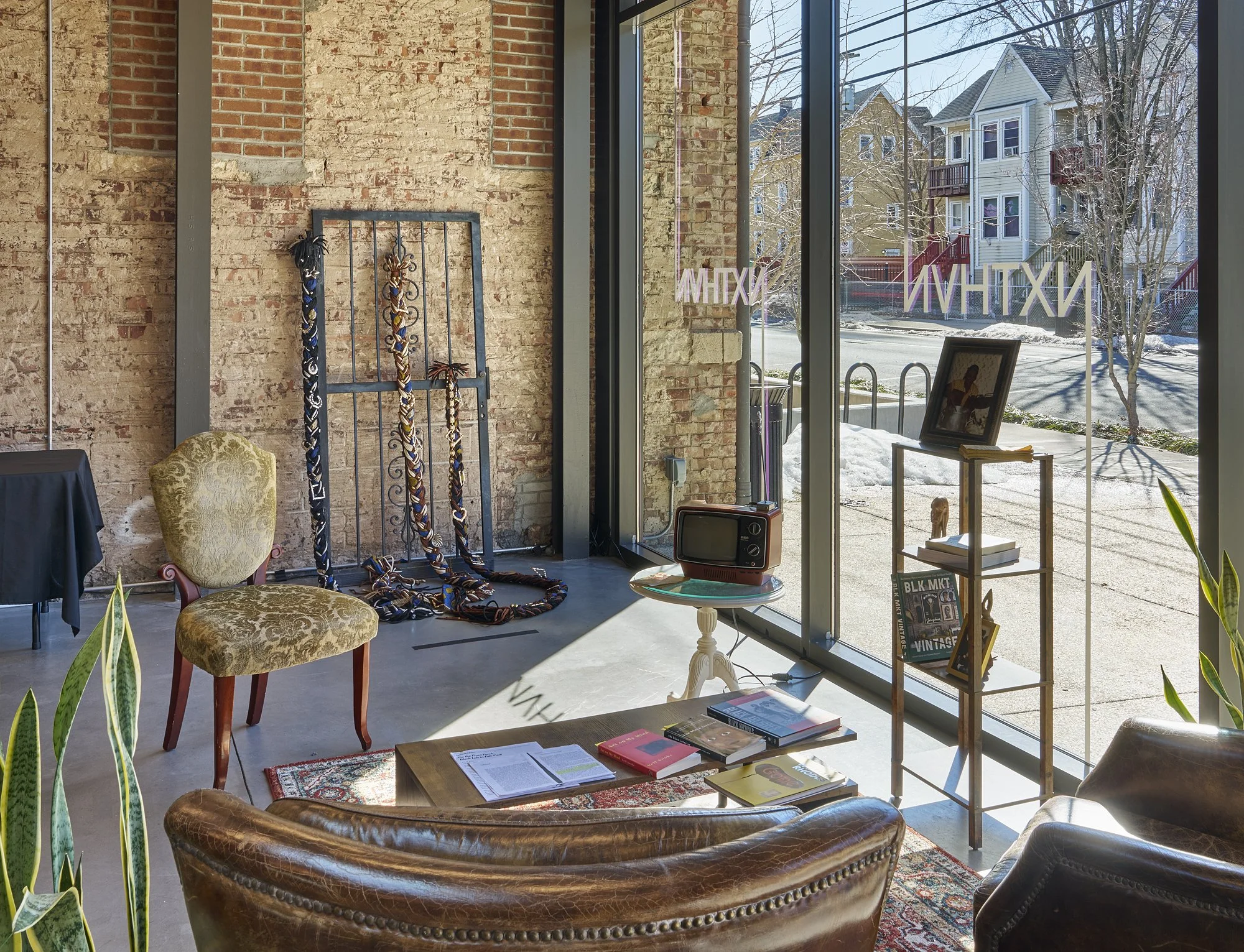
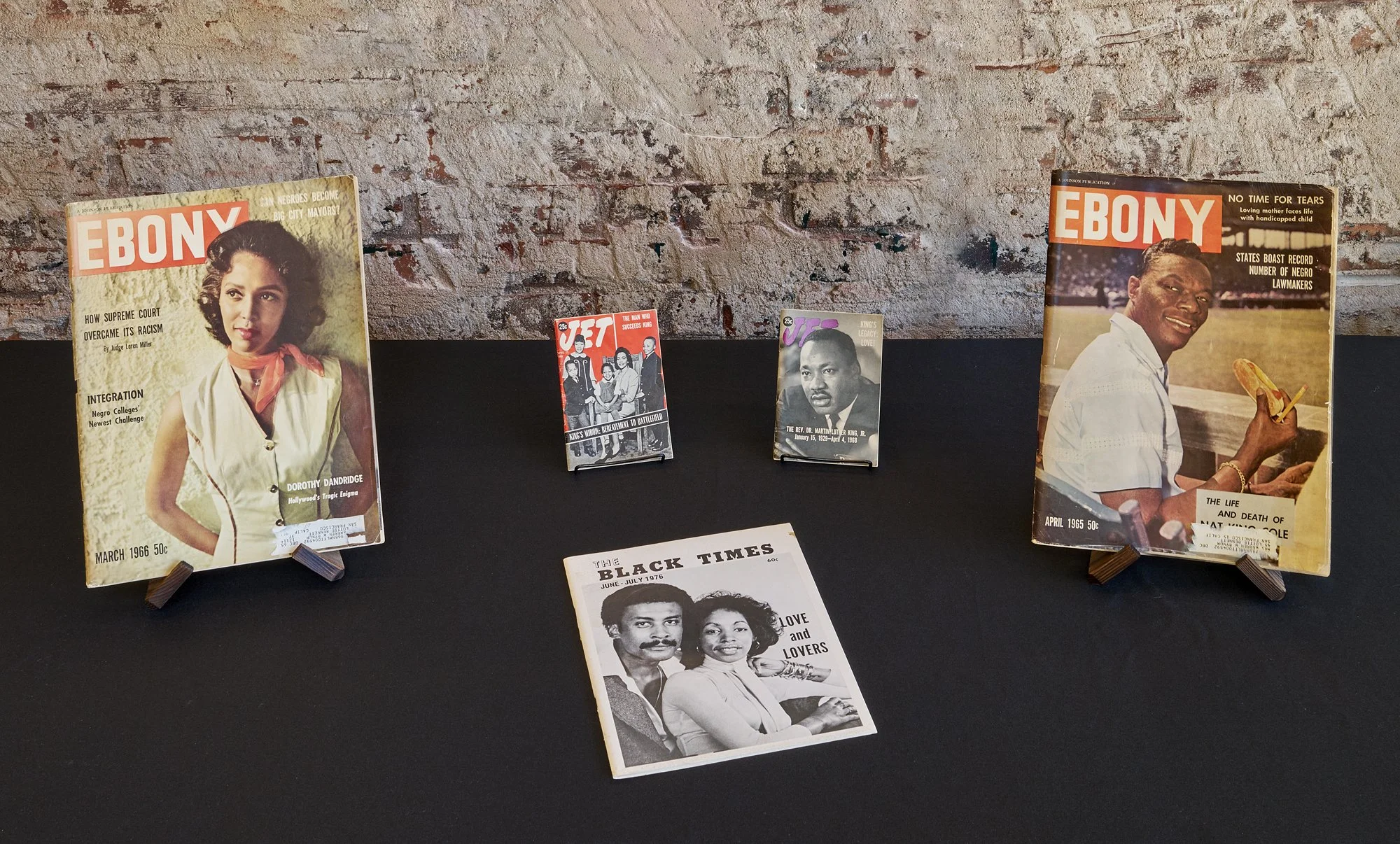
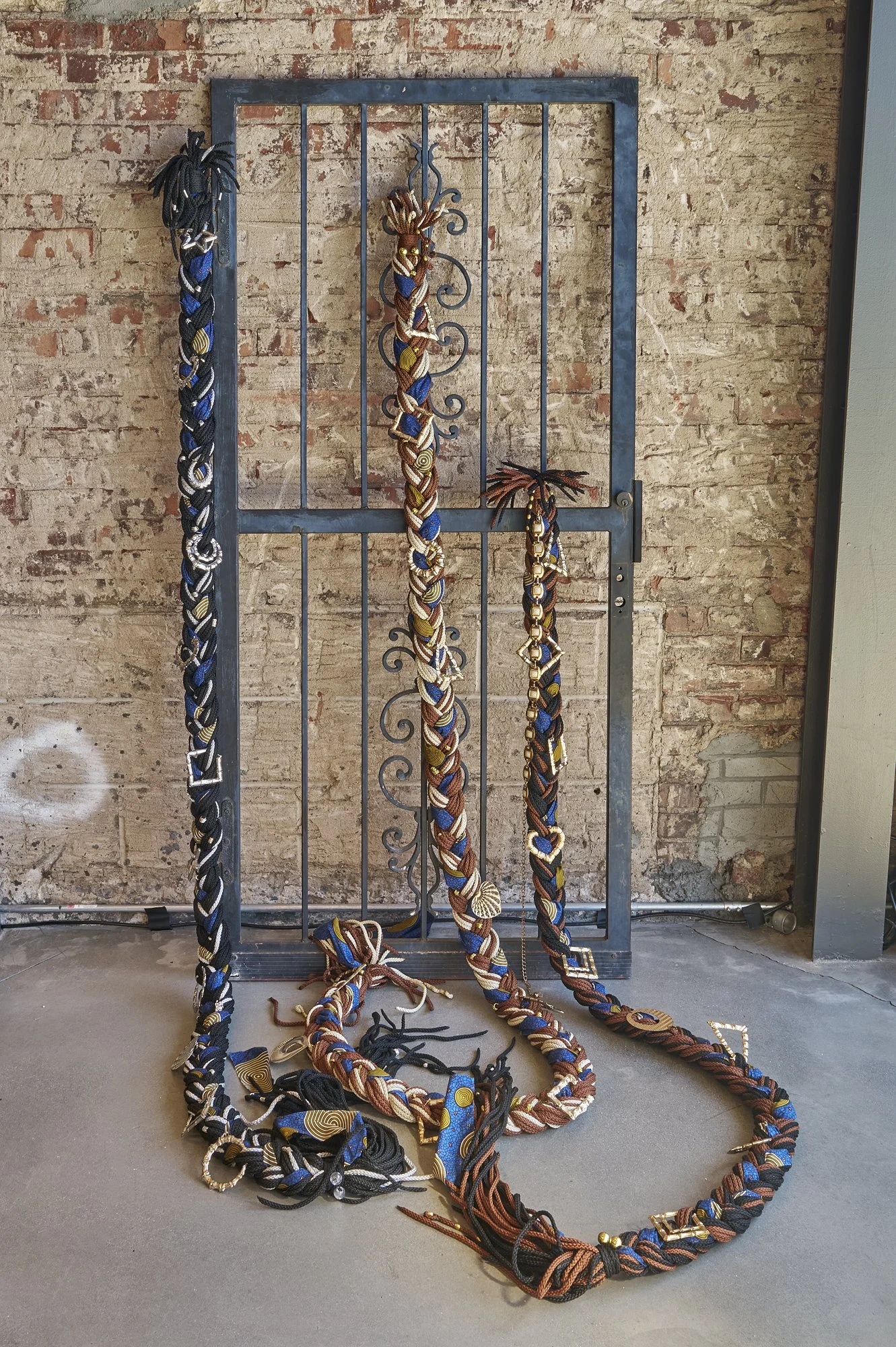
Chris Gardner Photo, courtesy of NXTHVN
CAFETERIA: Can you discuss the application process for the NXTHVN curatorial fellowship? What was that like?
Tara Fay Coleman: I heard about the fellowship a few years ago and applied previously, but I didn’t get in and usually when that happens, I'm like “never again,” but something pushed me to apply for this cohort and I got in this time.
Juanita Sunday: I'm from Connecticut so I’ve known about NXTHVN for a while. It’s been on my radar for about the last five years. There are not that many programs that offer a curatorial fellowship like this, especially programs that don’t require an advance degree and accept independent curators like Tara and myself, let alone fellowships that are paid. NXTHVN’s fellowship is very rare. This was actually my first time submitting — I’ve tried to submit for a while and it just didn’t happen. One year, the application was one minute late and it didn’t go through. Other years, I got really caught up on the writing, but I think everything is just timing. I think this year was the year for me and it just worked out.
How does NXTHVN make fine art more accessible?
TFC: As Juanita mentioned, NXTHVN is one of the few programs that supports independent curators. I thought that not having an MFA would be a disadvantage and work against me, but NXTHVN really emphasized that they wanted non-institutional perspectives. I think that approach in and of itself is really the antithesis to the elitism that we see in the art world, which Titus Kaphar has experienced firsthand. He’s spoken a lot about navigating those spaces as an artist. Both Juanita and I have had negative experiences as well. I’ve worked in different cultural institutions, while Juanita has collaborated with certain organizations that have not respected her ideas.
Juanita: NXTHVN definitely takes a more inclusive approach, community programming is embedded within what we do. For instance, family programming is included in the exhibition. The opening reception is geared towards families and communities because it is important to think about how we want to invite the community into the space. I think that steps outside of the fine art world’s tendency to cater to a specific audience. As curators, we need to consider who we are serving and what they want to see. It’s not just about the fine art world. NXTHVN doesn’t sell art, it’s not one of those white box galleries. When I'm curating an exhibition, it’s crucial to think about who this space is for.
Can you speak to the value of curating an exhibition focused on joyful aspects of the Black experience at a time when racism is becoming more violent and visible?
TFC: I have to credit Juanita with creating the theme we landed on. We both came in with ideas as a prerequisite of the program. I was considering heavier themes because we are in a very fraught political climate, however, the idea of Glory brought me such a sense of joy. We were very intentional about portraying the visual aesthetic of the ‘70s rather than the social unrest that was happening at the time. The exhibition is set following the Civil Rights movement and we made it a point to not consider any of that and just center it on the home and working class families. We were both very aligned with including the New Haven community, especially because I’m an outsider. We featured visuals that a lot of people could resonate with and considered how they would feel walking into the space.
JS: There’s always so much going on in the world. When we think about the home and the interior, we think about where we can go to rest, where we can go to be ourselves outside of the public gaze. Who are we outside of the exterior things happening in the world where Blackness can just exist? Who are we when we’re with our families and loved ones where we can take off that mask? For me, that was the inspiration behind Glory, capturing the intimacy and love within the Black home.
What were some of the curatorial challenges of working with multiple different mediums?
JS: For me, that’s always been my practice. I enjoy materiality and curating a show that has multiple mediums in it. It’s always easier to tell a story that has different mediums and textures because it offers a multitude of ways to weave a narrative.
TFC: I was in a place where I was getting more into curating with regard to having a range of mediums, so similarly, I learned to appreciate different materials as well as sculptural installation-based work and pairing different mediums in an uncanny way. I think we’ve done that really well with Glory. Aesthetically, Juanita and I have very different approaches, but you can really feel the sense of alignment in the curation of the show. The way everything came together, it’s as if the work is all meant to live alongside one another. Everything fits together.
What do you hope visitors take away from the exhibition?
TFC: It's always open to interpretation, but we were pretty explicit in our approach and although we wound up having to reframe certain elements – initially, we wanted to have a room by room layout, but couldn’t do that logistically – we were still able to convey the feeling of home. We pulled from our own experiences to make it as nostalgic as possible. I included the wood panelling from my childhood home while Juanita sourced pictures for the family album. We’ve already had people come up to us and tell us that it reminds them of their homes, like “Oh this is the color my parents had in their house when I was growing up.” We hope it feels joyful, familiar and like home. We want people to feel like they can leave the heaviness of the world at the door.
JS: I hope people feel at home in the exhibition and walk away feeling a sense of joy and pride, but also remembering that we hold our history in the objects that we keep in our homes. The home interior is an archive and holds memories and culture. We should be telling our own stories and our own history. I hope that’s something people continue to place value in.
Works by Faustin Adeniran, Akea Brionne, Patrick Eugéne, Chris Friday, Tyler Mitchell, Woody De Othello, Bria Sterling-Wilson, Jomo Tariku, Shawn Theodore and Vantablack.